
Ditch the Cables: Why a Jump Starter Box is Your Lifesaver
NaTasha Brand • September 8, 2025
In the battle against dead batteries, it’s better to bring a power pack to a cable fight.
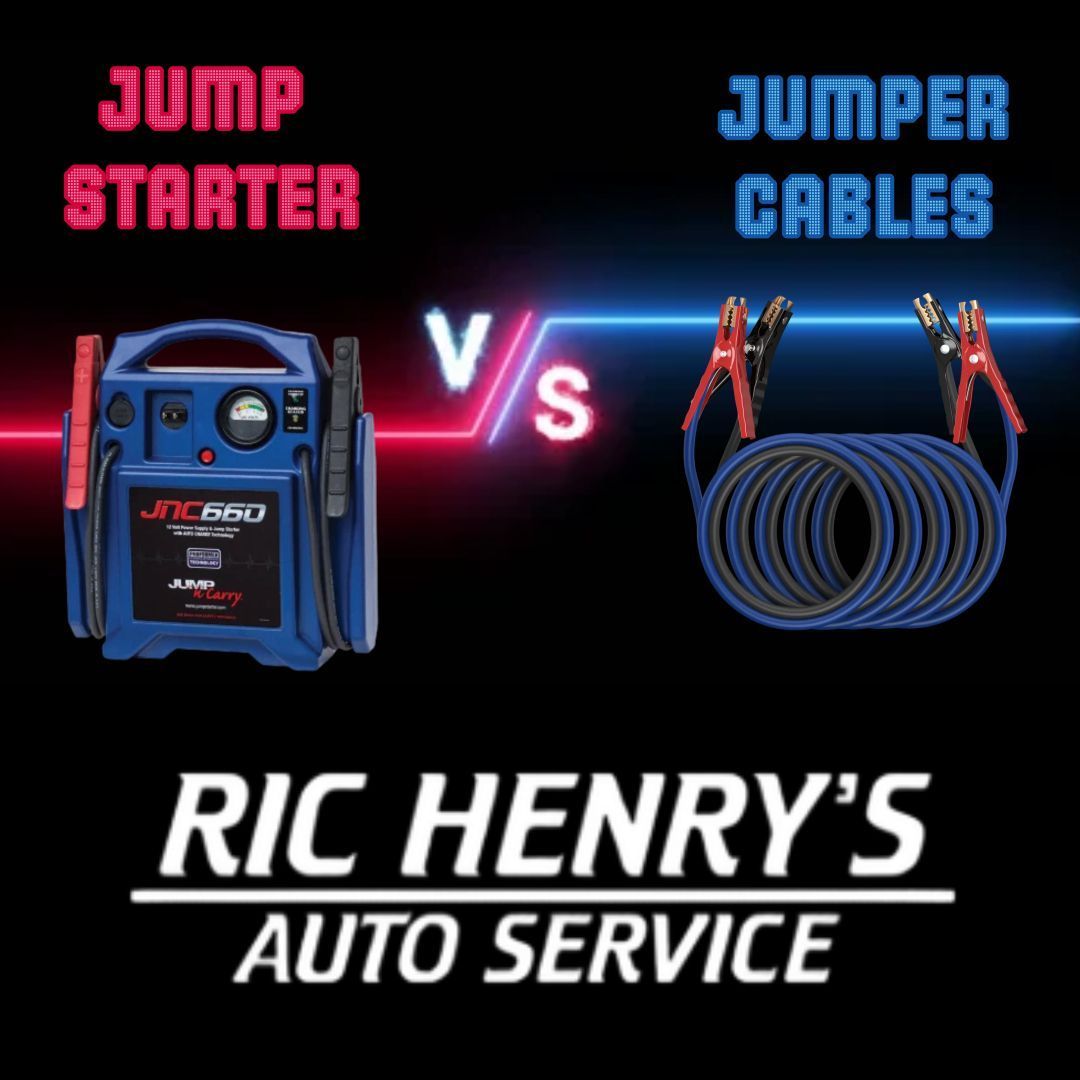
Let's paint a familiar West Texas picture. You're leaving the H-E-B on Bryant Blvd, your arms full of groceries, the San Angelo sun beating down. You turn the key and... click-click-click-click. Nothing. That dreaded, soul-crushing sound of a dead battery.
Your heart sinks. Now, you have two options: The ancient ritual of fumbling with jumper cables, hoping a benevolent stranger with a correctly aligned vehicle and the patience of a saint will stop. Or, you can reach into your trunk for a modern marvel: the jump starter box.
One of these options belongs in 2025. The other belongs in a museum next to the eight-track player. Let's break down why, for San Angelo drivers, the jump starter box isn't just better, it's a game-changer.
The Contenders: A Tale of Two Technologies
Jumper Cables:
The classic. Essentially two thick, heavy gauge wires with alligator clips on each end. Their function is simple: they act as a conduit, siphoning power from a donor vehicle's healthy battery to your dead one. It's a transfusion, requiring a second, running car to act as the donor. The process involves precarious positioning, a mini-lesson in positive/negative terminal identification, and a silent prayer that you don't cause an electrical surge that fries your ECU.
The Jump Starter Box (or Portable Power Pack):
The new champion. This is a compact, lithium-ion power bank designed specifically for jump-starting cars. It contains a high-capacity battery, a set of smart clamps, and often a suite of bonus features like USB ports for charging phones, LED flashlights, and even air compressors. Its function is autonomous power. It doesn't need another car. It is the other car.
Why the Jump Starter Box is the Undisputed Winner
While jumper cables get the job done (on a good day), a jump starter box does it better, safer, and smarter. Here’s why it’s the essential piece of kit for every vehicle in San Angelo, from a downtown commuter to a ranch truck out in Christoval:
- The Glorious Gift of Independence: This is the big one. With a jump starter box, you are an island of self-sufficiency. No more waiting, no more awkwardly flagging down strangers in the Lowe's parking lot. Your rescue is sitting in your trunk, fully charged. This is especially crucial if your battery dies somewhere remote, like after a day out at O.C. Fisher Lake, where finding a "donor car" might be impossible.
- It’s Safer. Full Stop. Jumper cables are a recipe for potential disaster: reversed polarity, sparking near battery fumes, and voltage spikes that can wreak havoc on your car's sensitive computer systems. Modern jump starter boxes are packed with safety features: reverse polarity protection, spark-proof technology, and short-circuit protection. They are, for lack of a better term, idiot-proof. They simply won't work if you connect them wrong.
- Convenience is King: A jump starter box is all-in-one. It’s lightweight, often smaller than a textbook, and stores easily. Compare that to a tangled, dirty, heavy set of cables you have to dig out from under your spare tire. Plus, the added features like the flashlight are a godsend for dealing with a dead battery after the sun has set over Goodfellow Air Force Base.
- It’s Not Just for Cars: The versatility is a huge win. The USB ports can charge your phone, tablet, or any other device. That means even if your jump fails (which it likely won't), you still have a way to call for help. It’s a multi-tool for the digital age.
But What If the Box Fails? You Call the Pros.
A jump starter box is for emergencies, but a repeatedly dead battery is a symptom of a larger problem. It could be a failing battery, a bad alternator, or a parasitic drain. That’s where you need a professional diagnosis.
For all of us in San Angelo, the answer is clear: Ric Henry’s Auto Service. When your emergency jump-starter gets you going, bring your car to Ric Henry’s for a comprehensive check-up. Their experienced technicians use the same advanced tools and equipment as the dealership to pinpoint the exact cause of your battery issues. Plus, they back all their work with a solid 3-year/36,000-mile warranty, so you can drive with confidence across West Texas knowing the problem is truly fixed.
Think of it this way: a jump starter box is your brilliant first line of defense, and Ric Henry’s is your elite specialist ensuring the problem doesn’t happen again.
So, do yourself a favor. Retire those jumper cables to the garage wall as a monument to automotive struggles past. Invest in a jump starter box. It’s the difference between being a roadside damsel in distress and the hero of your own story.
Does engine braking damage your car? Discover the truth about downshifting, rev-matching, and brake fade. Trust your vehicle to Ric Henry's Auto Service in San Angelo for expert care.
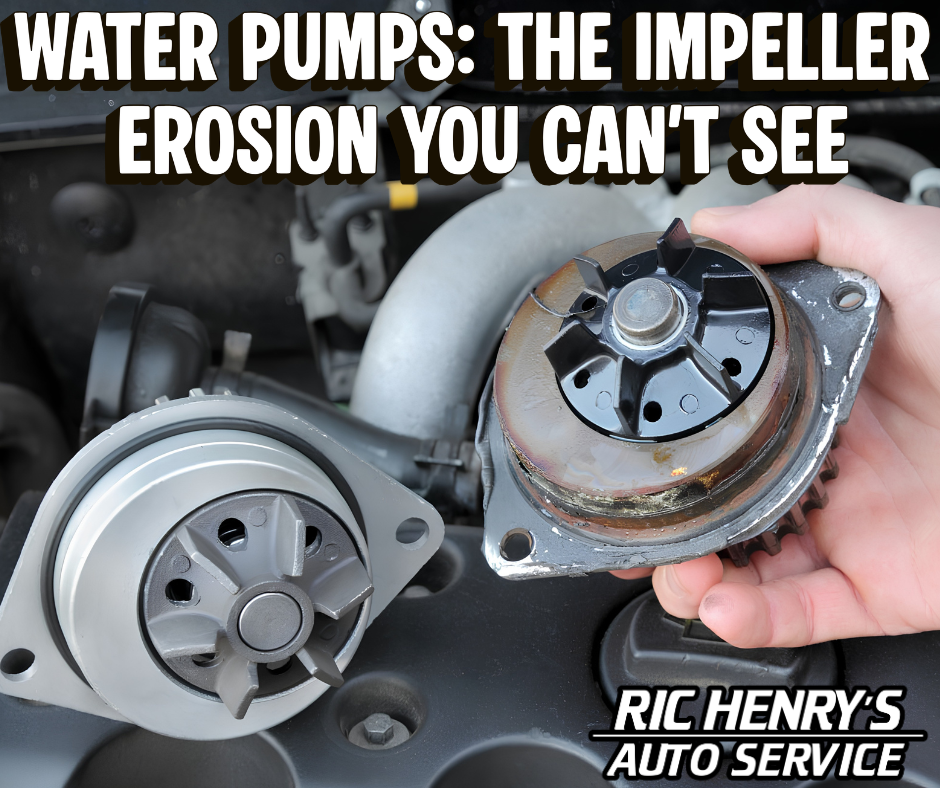
Water pump problems can hide behind impeller erosion and poor coolant circulation. Learn why San Angelo drivers trust Ric Henry's Auto Service for honest diagnostics, modern technology, and dealership-level care.

Is your modern car burning through oil? Discover the causes of excessive oil consumption in new engines and why San Angelo drivers trust Ric Henry's Auto Service, a legacy shop since 1966.
Stop asking, "Why do you need my VIN?" Learn the fascinating history of this 17-digit code, why it is critical for accurate repairs and recalls, and why we insist on it at Ric Henry's Auto Service, San Angelo's trusted dealership alternative since 1966.
Learn what the CAN Bus system does, warning signs of failure, and why San Angelo drivers trust Ric Henry’s Auto Service for honest, dealer-level diagnostics.
Learn what valve float is, its causes and warning signs, and how Ric Henry’s Auto Service provides trusted, modern engine diagnostics and repair for San Angelo drivers.
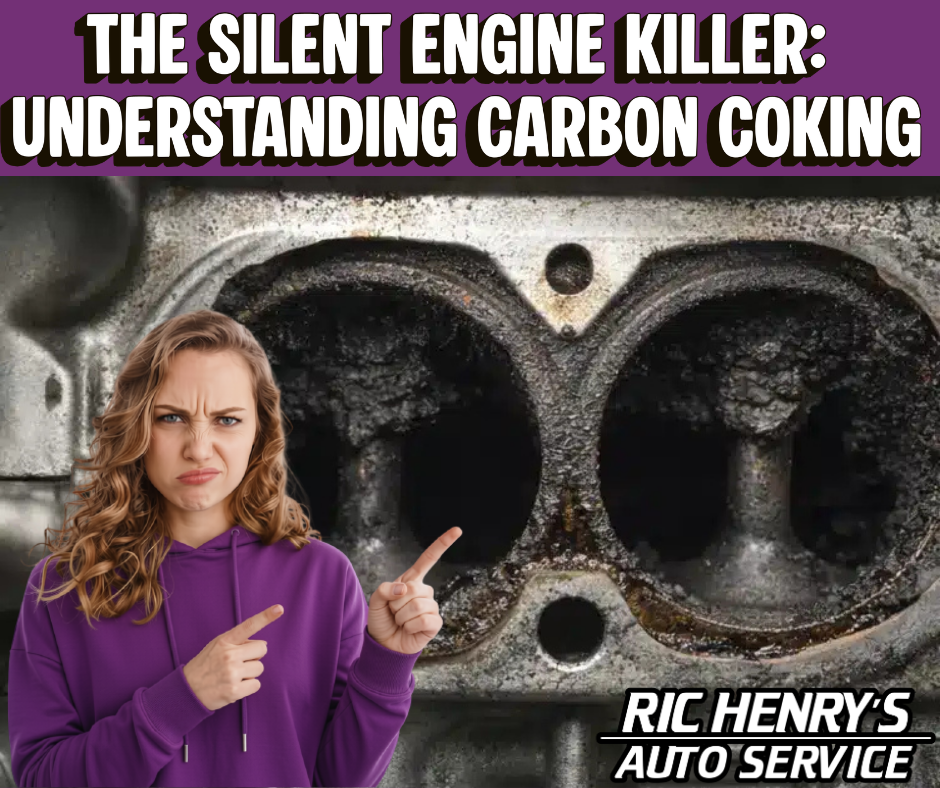
Worried about carbon coking in your direct injection engine? Learn the causes, symptoms, prevention tips, and why Ric Henry's Auto Service in San Angelo is the trusted dealership alternative you need.
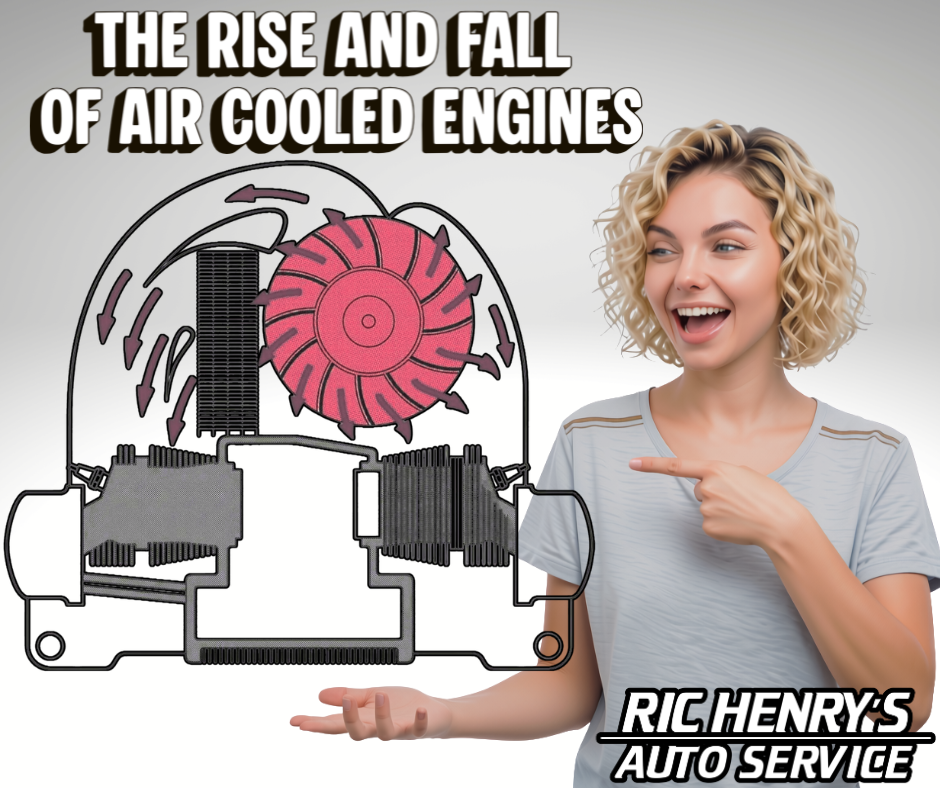
From the air-cooled VW Beetle to modern high-performance engines, the automotive world has evolved. Learn why regular coolant service is vital today and why Ric Henry's Auto Service in San Angelo is the trusted dealership alternative for generations.
Learn how dog-clutch gear engagement works, warning signs of transmission trouble.
Wondering what engine knock is and how knock sensors protect your diesel? Ric Henry's Auto Service in San Angelo explains symptoms, repairs, and why trust matters.