
What Causes "Clutch Slippage"?
NaTasha Brand • April 21, 2026
(When Your RPM Rises but Your Car Just… Doesn’t Go)
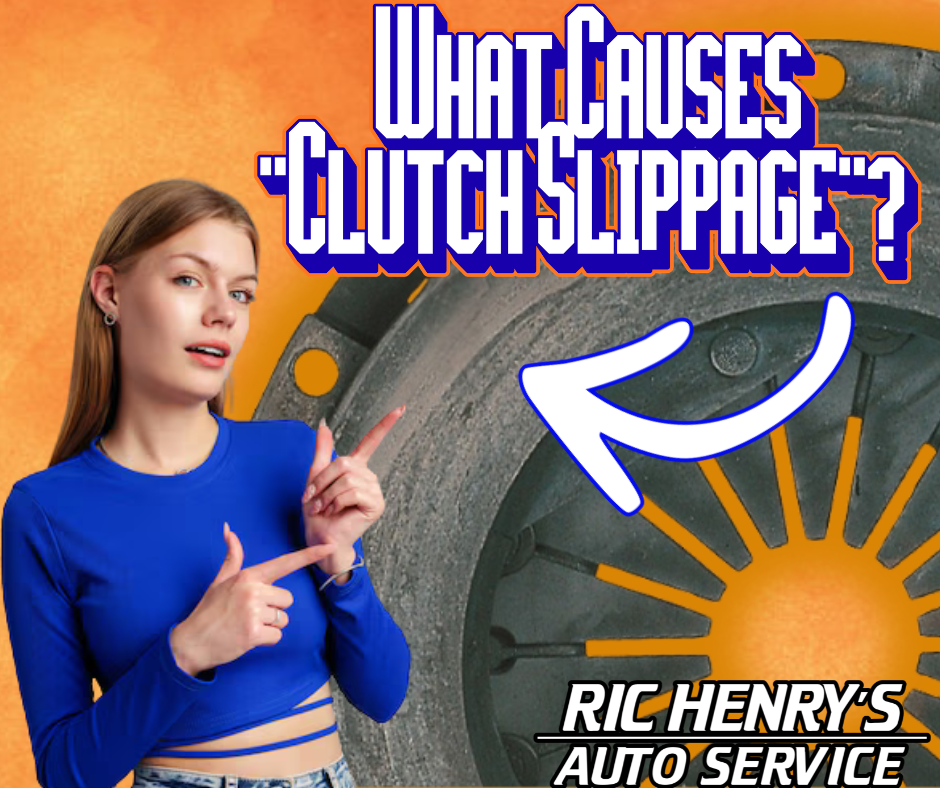
You step on the gas. The tachometer needle jumps like you just challenged a Hellcat to a drag race. The engine roars. Your pulse quickens. And then… nothing. The speedometer barely moves. Your car feels like a treadmill set to “cruel joke.” Welcome to the frustrating world of clutch slippage.
Here at Ric Henry’s Auto Service in San Angelo, we see this all the time. A customer rolls in, frustrated, saying, “I’m burning gas and going nowhere fast.” And they’re not wrong. Let’s talk about what’s actually happening inside your manual-transmission ride.
The Three Usual Suspects
When your engine revs freely but your car doesn’t accelerate, the clutch isn’t doing its job. It’s slipping instead of gripping. In our experience, it almost always comes down to one of three culprits:
When your engine revs freely but your car doesn’t accelerate, the clutch isn’t doing its job. It’s slipping instead of gripping. In our experience, it almost always comes down to one of three culprits:
- The Disc Worn Thin
Your clutch disc has friction material, just like brake pads. Over time and miles (or bad habits like resting your foot on the clutch pedal), that material wears down to the rivets. When it’s thin, there’s nothing left to grab the flywheel. Result? Revs go up, car yawns. - A Weak Pressure Plate
The pressure plate is the muscle that clamps the disc against the flywheel. When its diaphragm springs fatigue or crack, that clamping force drops. Think of it like a handshake from a tired grandpa instead of a firm grip from a ranch hand. The disc spins, but the plate can’t hold it tight. - Oil Contamination (Usually a Rear Main Seal Leak)
This is the sneaky one. The rear main seal sits between your engine and transmission. When it starts leaking, engine oil sprays onto the clutch disc. Now your nice, grippy friction surface is as slick as a Concho River rock after a rainstorm. No grip. No go. And if you ignore it, you’ll be back for both a clutch and an engine seal job.
The Simple, Unavoidable Fix
Here’s the truth we tell every customer who walks into our shop on Pulliam Street: you cannot fix a slipping clutch with an additive, a prayer, or “driving easier.” Once it slips, the damage is done.
You need to replace the clutch assembly, disc, pressure plate, and release bearing, as a set. And we strongly recommend resurfacing or replacing the flywheel. A glazed or heat-checked flywheel will ruin your new clutch in weeks. That’s just throwing money into a West Texas dust storm.
Why You Need a Shop You Can Trust (Hint: Look for the One Evolving with the Industry)
Anybody with a wrench can swap a clutch. But doing it right? That takes discipline, experience, and equipment that keeps up with modern cars. That’s where we separate ourselves.
We’ve been evolving with the automotive industry for years right here in San Angelo. We don’t guess. We don’t cut corners. We use the same diagnostic tools and equipment that the dealership uses, because we believe your car deserves factory-grade precision without the factory-grade attitude.
When we drop your transmission, we don’t just throw parts at it. We check the rear main seal. We inspect the flywheel for runout. We clean everything like we’re prepping for surgery. And we stand behind that work with a 3-year / 36,000-mile warranty on all services we provide. Try finding that at the corner “shade tree” operation.
We also offer comprehensive auto repair services beyond clutches, brakes, suspension, engine diagnostics, you name it. From minor fixes to major overhauls, our experienced technicians handle it all. Because we know that when you live in San Angelo, your car isn’t a hobby. It’s how you get to work, haul the kids, and escape the summer heat.
Trust Your Car to Ric Henry’s Auto Service
Here’s the bottom line: clutch slippage won’t heal itself. Every time you let it slip, you’re grinding down what’s left and risking damage to your flywheel, transmission input shaft, and your wallet.
So when the RPMs rise and your speed doesn’t, don’t panic. Just get it to us.
Trust your car in the hands of Ric Henry’s Auto Service. We’ll give you an honest diagnosis, a fair price, and a repair that actually holds.
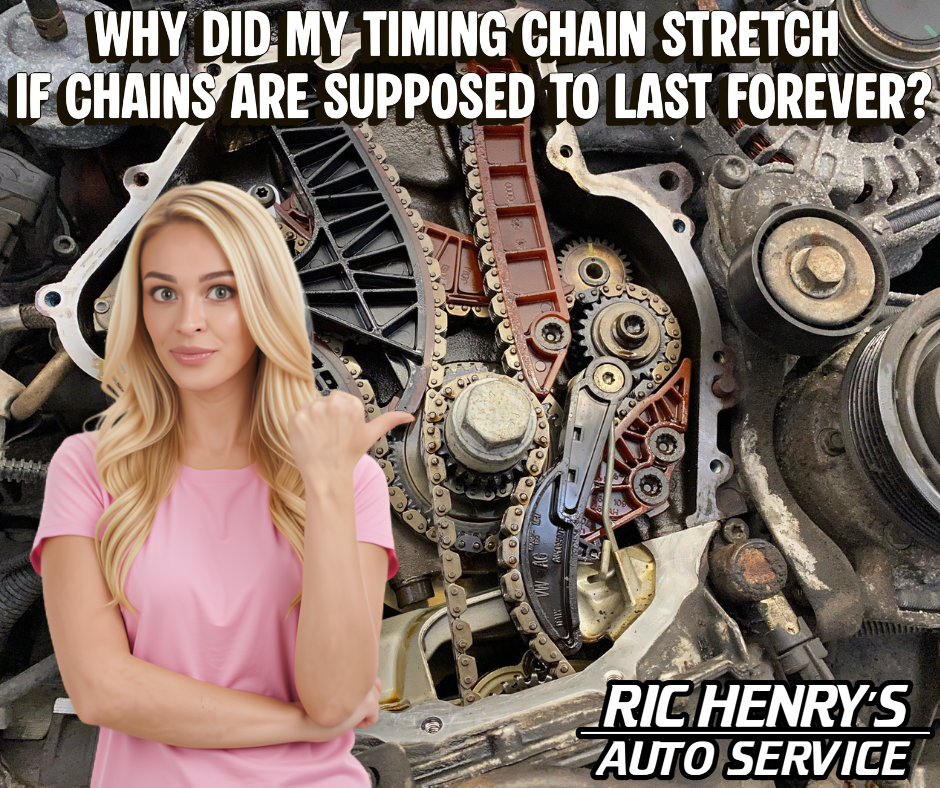
Why did your timing chain stretch? Learn the truth about timing chain wear and why oil maintenance is key. Trust Ric Henry's Auto Service in San Angelo for honest diagnostics and dealer-level care without rearranging your life.
Why does your shop recommend a repair the dealer did not? Ric Henry's Auto Service explains diagnostic approach, liability, and who is actually reading the data. Trust San Angelo's dealership alternative for honest diagnostics. Dealer-level care without rearranging your life.
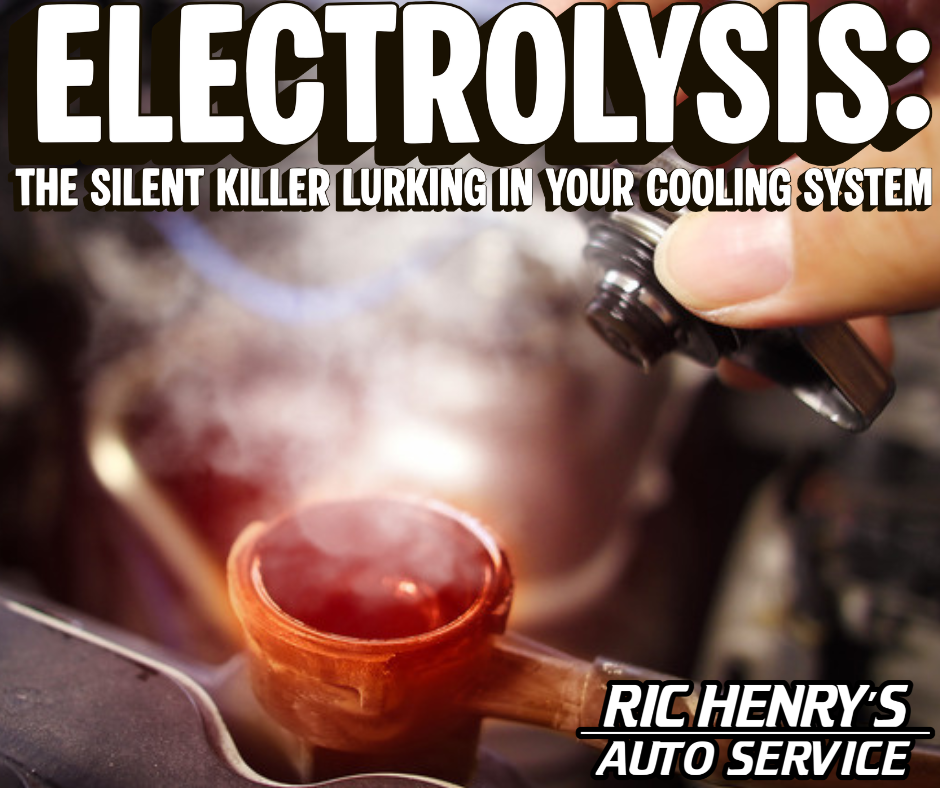
Is electrolysis eating your radiator from the inside? Ric Henry's Auto Service explains stray voltage, bad grounds, and how to test with a multimeter. Trust San Angelo's dealership alternative for expert cooling system repair. Dealer-level care without rearranging your life.
Is your brake pedal going to the floor? Ric Henry's Auto Service explains master cylinder bypass, air in the system, and ABS module bleeding. Trust San Angelo's dealership alternative for expert brake repair. We offer dealer-level care without rearranging your life.

Does Eco Mode actually save you money? Ric Henry's Auto Service in San Angelo breaks down throttle mapping, shift points, and AC cycling to give you the honest answer. Trusted auto repair since 1966.
Is running your car low on gas bad? We debunk the fuel pump cooling myth and the sediment reality. Trust Ric Henry's Auto Service in San Angelo for honest diagnostics.
Is your clutch slipping or smelling like burnt money? Learn the signs of clutch failure and why San Angelo trusts Ric Henry's Auto Service for honest diagnostics and dealer-level care.

Wondering why your European car has such frequent service intervals? Ric Henry's Auto Service in San Angelo explains the engineering behind the schedule and why trusting a modern, experienced shop matters.

Carbon cleaning is not optional on direct-injection European cars.

Is your car in Limp Mode? Learn why your vehicle limits power to protect the engine and why you should trust Ric Henry's Auto Service in San Angelo for honest diagnostics and dealer-level care.