
What Causes 'Misfire' That Only Happens When Engine Is Warm
NaTasha Brand • April 8, 2026
(And Why You Shouldn’t Ignore It)
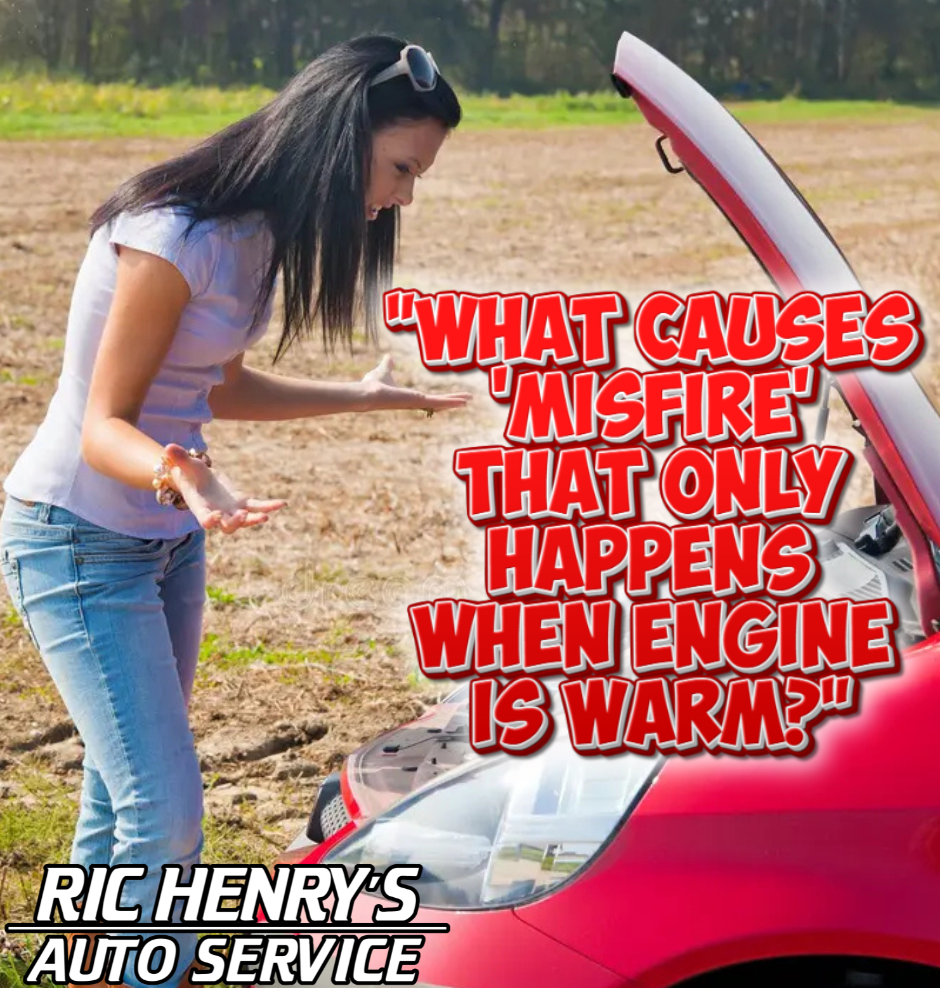
You know that feeling. You fire up your ride on a cool San Angelo morning, maybe heading out from Santa Rita or merging onto Houston Harte, and everything feels perfect. Smooth idle. Good power. Life is fine.
Then, ten or fifteen minutes later, the engine reaches operating temperature. Suddenly: stumble, shudder, check engine light blinks. The power cuts. It feels like the engine is trying to shake itself out of the engine bay. You pull into a parking lot near Sunset Mall, let it cool down, and magically, it’s fine again.
What in the West Texas heat is going on?
Welcome to the frustrating world of heat-related intermittent misfires. These aren’t your standard “bad spark plug” problems. These are gremlins that hide until everything gets hot, and they require a shop that doesn’t just throw parts at the problem. Here at Ric Henry’s Auto Service, we’ve been chasing these thermal ghosts for decades, and we’re going to explain exactly what causes them.
The Usual Suspects: Why Heat Breaks Things
Heat expands metal. Heat increases electrical resistance. Heat pushes failing components right over the edge. When a misfire only happens on a warm engine, we stop guessing and start testing three specific culprits:
- Ignition Coil Breakdown When Hot
Your ignition coils take low voltage from the battery and turn it into the lightning bolt needed to fire the spark plugs. Inside each coil is a series of windings and insulation. Over time, that insulation gets brittle. When the coil is cold, everything contracts and the crack closes. But once the engine bay soaks up heat, especially on a 100-degree day here in San Angelo, that crack opens up. The high voltage leaks to ground instead of reaching the spark plug. The result? A misfire that vanishes as soon as the car cools off. We see this constantly on GM, Ford, and Toyota trucks. The customer swears they need a tune-up. What they actually need is a coil that won’t fail under thermal stress. - Fuel Injector Electrical Issues
Here’s one that fools a lot of DIYers. A fuel injector has a small solenoid inside, basically an electromagnetic plunger. When the injector’s internal winding starts to fail, the resistance changes as it gets hot. Too much resistance, and the engine computer can’t open the injector. No fuel to that cylinder = misfire. Cool it down, resistance drops, and the injector works again. We’ve seen drivers spend hundreds on spark plugs, wires, and even catalytic converters, only to find out a single injector was quitting after 20 minutes of driving. That’s why we don’t guess. We use the same dealer-level diagnostic tools to watch injector response in real time, hot and cold. - Crankshaft Sensor Heat Failure
This one is sneaky. The crankshaft position sensor tells the engine computer when to fire the spark and inject fuel. These sensors are usually magnetic. Heat can cause the internal magnet to weaken or the sensor’s electronic module to start failing intermittently. When that happens, the computer loses sync. You might get a single misfire, a total cutout, or a check engine light for random multiple misfires. The worst part? The sensor often tests perfectly fine when the engine is cold. We have to heat-soak the vehicle, monitor live data, and watch for the signal to glitch. That takes time, experience, and a shop bay, not a parts store parking lot.
Why You Need a Shop You Can Trust (Hint: Us)
Let’s be honest. A parts-store code reader will give you a P0300 random misfire code. That tells you something is wrong, but not what is wrong. A less-experienced shop might sell you a full tune-up, six coils, or a fuel system cleaning, and the problem will come right back the next time the engine gets hot.
We take a different approach. At Ric Henry’s Auto Service, we don’t chase parts. We chase data. Our experienced technicians are equipped to handle a wide range of repairs, from minor fixes to major overhauls, but our specialty is diagnosis that actually solves the problem the first time.
We use the same tools and equipment that the dealership does. Not “similar.” The same. That means we can graph ignition coil primary and secondary voltage, perform relative compression tests, and watch crankshaft sensor waveforms while your engine is acting up. We don’t guess. We prove.
And because we’ve been evolving with the industry for years, we know that today’s cars require more than a wrench and a prayer. We also offer multiple other system maintenance services, cooling flushes, fuel system cleaning, electrical system testing, because heat affects everything.
Our Promise to San Angelo
We’re local. We know the heat. We know the dust. And we know that you need your car to start and run every single day, whether you’re commuting to Goodfellow AFB, running kids to Central High, or hauling a trailer out to O.C. Fisher Lake.
That’s why we stand behind every repair with a 3-year / 36,000-mile warranty on all services we provide. Not just parts. Labor, too. You don’t get that from the corner shade-tree mechanic, and you don’t get that from the dealership’s fine print.
If your car is misfiring only when warm, don’t live with the frustration. Don’t keep pulling over to let it cool down.
Trust your car in the hands of Ric Henry’s Auto Service. We’ll find the real cause, fix it right, and have you back on the road with the confidence that the next time the engine warms up, the only thing you’ll feel is the AC blowing cold.

Wondering why your European car has such frequent service intervals? Ric Henry's Auto Service in San Angelo explains the engineering behind the schedule and why trusting a modern, experienced shop matters.

Carbon cleaning is not optional on direct-injection European cars.

Is your car in Limp Mode? Learn why your vehicle limits power to protect the engine and why you should trust Ric Henry's Auto Service in San Angelo for honest diagnostics and dealer-level care.

Unlock the mystery of DEF fluid and Selective Catalytic Reduction. Learn why your diesel drinks it and why Ric Henry's Auto Service is San Angelo's trusted dealership alternative for expert diesel care.
Why does brake fluid need changing in a closed system? Learn how hygroscopy lets water ruin your brakes, and trust Ric Henry's Auto Service in San Angelo for honest, dealership-level care.

Is your car's temperature gauge rising in traffic but dropping on the highway? Learn why this happens and why you should trust Ric Henry's Auto Service in San Angelo for honest cooling system repairs.
Does engine braking damage your car? Discover the truth about downshifting, rev-matching, and brake fade. Trust your vehicle to Ric Henry's Auto Service in San Angelo for expert care.
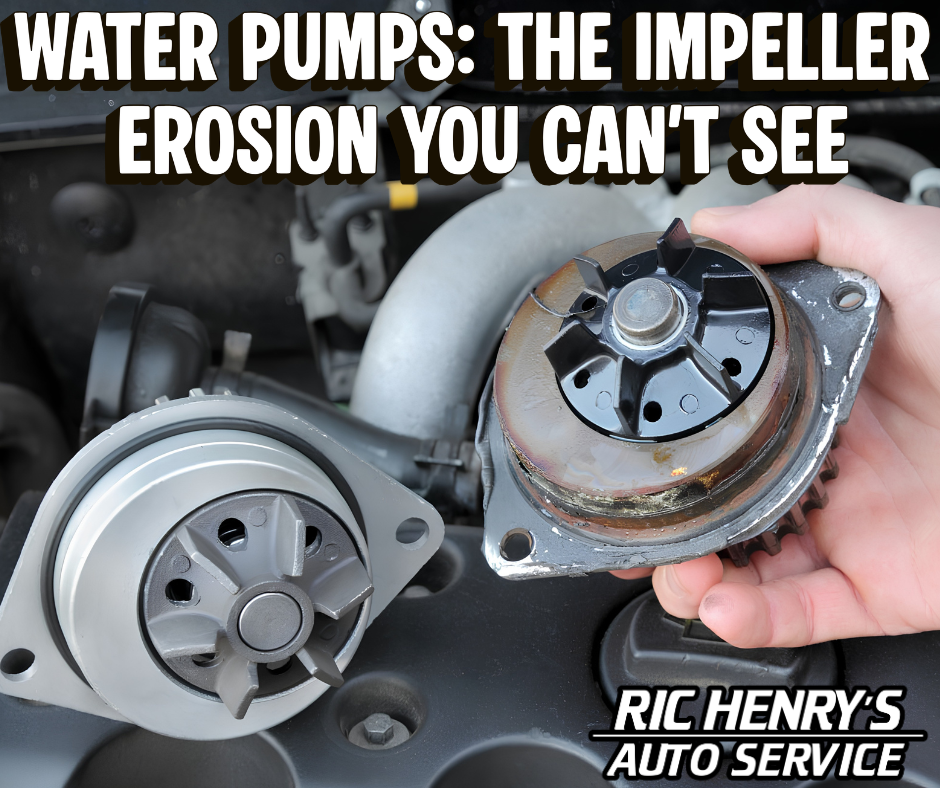
Water pump problems can hide behind impeller erosion and poor coolant circulation. Learn why San Angelo drivers trust Ric Henry's Auto Service for honest diagnostics, modern technology, and dealership-level care.

Is your modern car burning through oil? Discover the causes of excessive oil consumption in new engines and why San Angelo drivers trust Ric Henry's Auto Service, a legacy shop since 1966.

Stop asking, "Why do you need my VIN?" Learn the fascinating history of this 17-digit code, why it is critical for accurate repairs and recalls, and why we insist on it at Ric Henry's Auto Service, San Angelo's trusted dealership alternative since 1966.