How Long Do Brake Pads REALLY Last?
Brake wear, warning signs, and why trusted dealer-level care matters
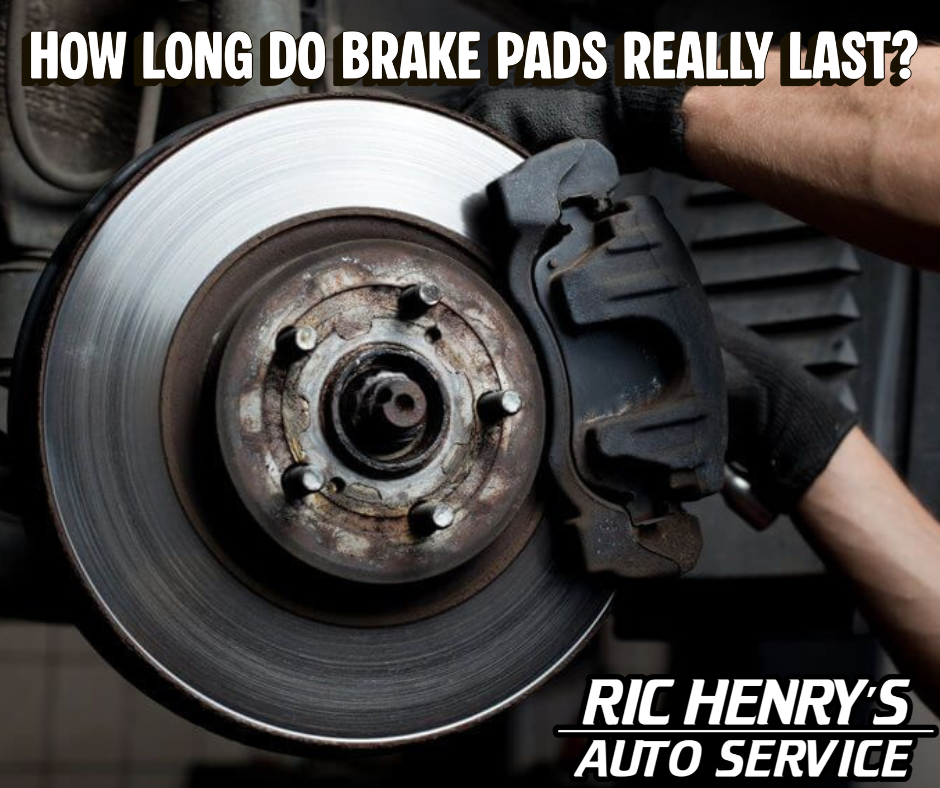
Let us cut right to the chase. If you are looking for a single, magic number for how long brake pads last, you are going to be sorely disappointed. The answer is as varied as the Texas weather, and frankly, it depends more on you and your driving habits than it does on the pads themselves. As a general rule of thumb, you can expect a set of pads to take you anywhere from 20,000 to 60,000 miles. That is a wide range, but it is the reality of automotive physics, not a mechanic trying to hedge their bets.
To understand why, you have to look at how this whole system works. When you push that pedal, hydraulic fluid forces a caliper to squeeze the brake pads against a metal rotor. That friction is what turns your kinetic energy into heat, stopping your two-ton missile on wheels. The front brakes handle roughly 70% of the heavy lifting, which is why they always wear out faster than the rears. This is also where material science comes into play. Modern pads are not all created equal. You have organic compounds for everyday commuting, semi-metallic blends for heavy-duty hauling, and ceramic formulations that offer quieter, low-dust performance. Each has a different lifespan, and each reacts differently to the stop-and-go grind of San Angelo traffic versus the open stretches of Highway 87.
So what does that mean for you behind the wheel? If you are a gentle braker who anticipates lights and coasts to stops, you might stretch those ceramic pads to the upper 60,000-mile mark. If you have a lead foot and brake hard at the last second, especially in our summer heat, you could be looking at replacement closer to 25,000 miles. Towing a boat to O.C. Fisher or hauling equipment across town cuts that life even shorter. The point is, mileage is just a rough guide. Your driving style, your vehicle weight, and even the quality of the parts you choose all write the real story. That is why we never give a blanket number without putting eyes on the car first.
Now, let us talk about the warning signs because ignoring them is where the real trouble starts. If you hear a high-pitched squeal when stopping, that is your pad's built-in wear indicator telling you it is time. A grinding or growling noise means you have worn through the pad entirely and are now scraping metal on metal, which destroys your rotors and turns a simple pad swap into a much more expensive rotor replacement job. Beyond noise, pay attention to vibration in the brake pedal, a pulling sensation to one side, or a longer stopping distance. These are your car screaming for help. If you ignore them, you are not just looking at a bigger repair bill; you are gambling with your safety and the safety of everyone else on Knickerbocker Road.
This is precisely why you need a shop you can trust, one that has been evolving with the industry for decades. We are Ric Henry's Auto Service, and we are not some fly-by-night operation with a code reader and a prayer. Our family auto repair roots date back to 1966, and we have been proudly serving San Angelo drivers for generations. Just because we have been around since the Johnson administration does not mean we are stuck in the past. We are a fully modernized shop with all the latest diagnostic tools and equipment, the same stuff the dealerships use. Cars are more than our industry; they are our passion, and we take big Texas pride in being who San Angelo can trust for generations.
When you bring your vehicle to us, you are getting dealer-level care without rearranging your life. We offer concierge pickup, early-bird drop-off, online booking, and phone status updates so you are never left wondering. Our experienced technicians handle everything from minor fixes to major overhauls, and we explain every repair before we sell it, because honest diagnostics are the foundation of trust. We back all our services with a 3-year, 36,000-mile warranty, and we offer comprehensive maintenance on everything from your transmission to your AC. So the next time you feel that pedal get a little soft or hear that squeal, do not roll the dice.
Trust your car in the hands of Ric Henry's Auto Service. After all, your brakes are the most important safety feature on your vehicle, unless you consider the horn, but good luck honking your way out of a red light.