
Why Your Oil Smells Like Gasoline
NaTasha Brand • March 30, 2026
(And Why You Shouldn’t Ignore It)
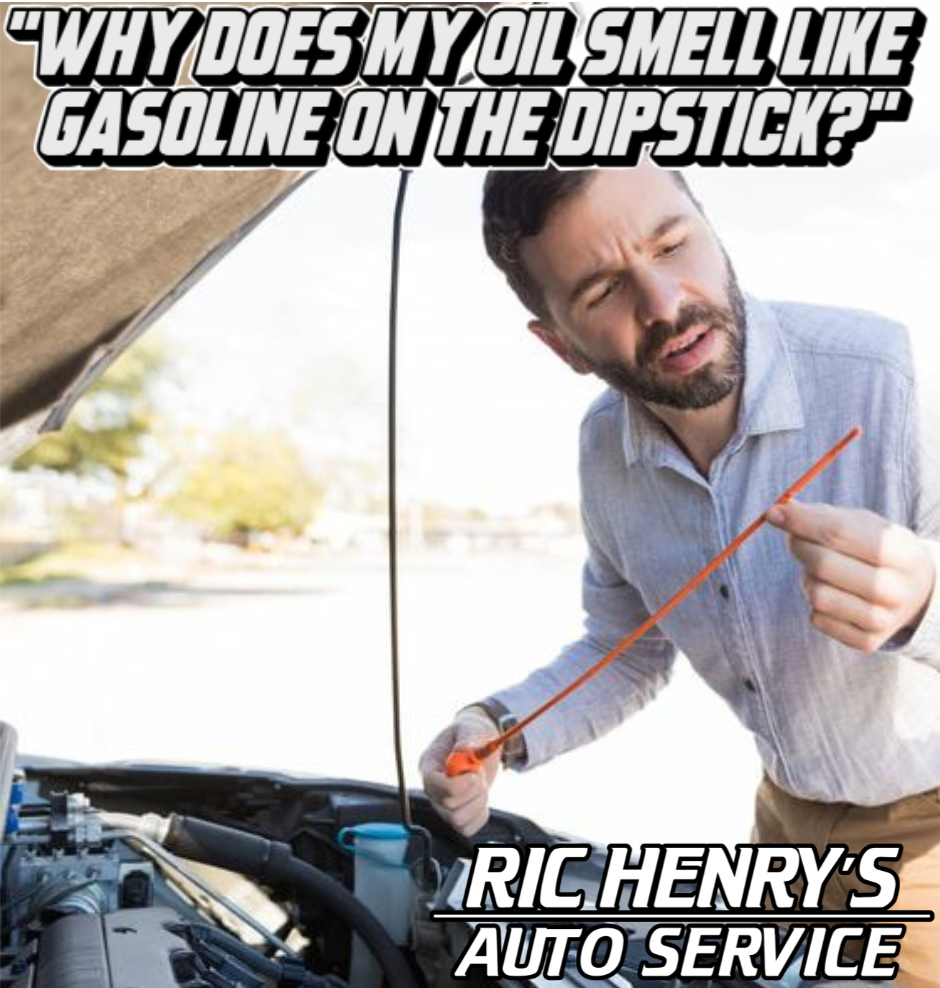
Let’s be honest. Most of us treat our vehicle’s dipstick like a prop in a horror movie, we pull it out, squint at the color, maybe wipe it on a rag, and pray we don’t see glitter (because glitter in oil is the automotive equivalent of a vampire showing up at noon). But there’s another olfactory horror that should make you stop dead in your tracks: the distinct, pungent smell of gasoline wafting up from that little metal wand.
If you’ve ever pulled the dipstick on your truck or car here in San Angelo, taken a whiff, and thought, “Did I just accidentally pour my morning coffee into the crankcase?”, you’ve got a problem. And it’s not one that’s going to fix itself with a bottle of mystery additive from the auto parts store.
Let’s talk about why your engine oil smells like it belongs in a fuel tank, why it matters, and why you need a shop that actually knows what they’re doing, like the team at Ric Henry’s Auto Service.
The Culprits: Why Is Gasoline Invading Your Oil?
In a perfect world, your engine keeps gasoline in the combustion chamber and oil in the crankcase, and the two never mix. But this is West Texas; we deal with heat, dust, and the occasional tumbleweed, perfect worlds don’t exist. When your dipstick smells like a gas pump, you’re dealing with fuel dilution. This usually boils down to three main issues:
- The Rich Mixture (Your Engine Is Eating Too Much)
Modern vehicles rely on a precise air-to-fuel ratio. When that balance goes haywire, often due to a faulty oxygen sensor, bad coolant temperature sensor, or sticky fuel injector, the engine’s computer panics and starts dumping excess fuel into the cylinders. That extra fuel doesn’t always burn. Some of it slips past the piston rings and drips down into the oil pan. Suddenly, your engine oil is cutting its 5W-30 with unleaded. - The Misfire (The Cylinder That Quit the Team)
A misfire is exactly what it sounds like. A cylinder fails to ignite the fuel mixture. Instead of a controlled explosion pushing the piston down, you get a cloud of unburnt fuel hanging out in the cylinder. Since that fuel has nowhere else to go, it eventually seeps past the piston rings and takes a bath in your oil. This doesn’t just smell bad; it’s a sign your engine is actively trying to sabotage itself. - The Short Trip Curse (The San Angelo Commute)
We all do it. You live three miles from work, or you’re just running from the south side to the grocery store near the college. These short trips are murder on modern engines. Your engine needs to reach operating temperature to burn off normal condensation and minor fuel vapors that naturally occur. If you never drive long enough for the oil to get hot, that fuel accumulates. Over time, your oil becomes less “lubricant” and more “flammable cleaning solvent.”
Why You Can’t Just “Change the Oil and Pray”
Here’s the part that keeps mechanics up at night: fuel dilution destroys engines, but it does so quietly. Gasoline is a solvent. Your engine oil is supposed to be a viscous barrier preventing metal-on-metal contact. When gasoline thins that oil, you lose film strength. Parts that used to glide now grind. Bearings spin. Rings seize.
You might think, “No problem, I’ll just change the oil.”
Changing the oil is step one. It’s like cleaning the blood off the floor after a knife fight. It’s necessary, but it doesn’t treat the wound. If you don’t fix the root cause, whether it’s that leaking injector, the misfiring coil pack, or the sensor telling the computer to drown the engine in fuel, you’re going to be back in the same boat in 500 miles, except this time, you might be calling a tow truck.
Why Trust Matters in a Town Like San Angelo
In San Angelo, your vehicle isn’t just a luxury; it’s a necessity. You need it to get out to the lake, haul gear, or simply survive the summer heat without your AC turning the cab into a pizza oven. So when you’re facing a problem as insidious as fuel dilution, you don’t want a parts-thrower. You want a diagnostician.
That’s where Ric Henry’s Auto Service comes in. We aren’t just slapping parts on until the check engine light goes dark. We’re solving the puzzle.
You need a shop that has evolved with the industry. You can’t diagnose a modern fuel trim issue with a stethoscope and a guess. At Ric Henry’s, our experienced technicians use the same tools and equipment that the dealership does. We don’t guess; we test. We perform comprehensive diagnostics to find out if you’re dealing with a rich mixture caused by a sensor failure, a misfire hiding in a specific cylinder, or simply a driving habit that needs a weekend road trip to clear out.
We offer comprehensive auto repair services, handling everything from minor fixes to major overhauls. Whether you need a full fuel system cleaning, ignition system repair, or just a fresh oil change to get you back to baseline while we fix the root cause, we’ve got you covered. And because we stand behind our work, we carry a 3-year/36,000-mile warranty on all services we provide.
You wouldn’t trust a random stranger with your family recipe for Texas chili, so don’t trust just anyone with the engine that gets you across town.
If your dipstick smells like a gas station convenience store, don’t wait for the knock. Trust your car to the team that’s been keeping San Angelo moving for years.
Trust your car in the hands of Ric Henry’s Auto Service. We’ll get the gas out of your oil so you can get back to doing more important things, like arguing about where the best breakfast tacos in town actually are.
Because the only thing that should smell like gasoline is the pump at the station, not the stick in your engine.

Is your car in Limp Mode? Learn why your vehicle limits power to protect the engine and why you should trust Ric Henry's Auto Service in San Angelo for honest diagnostics and dealer-level care.
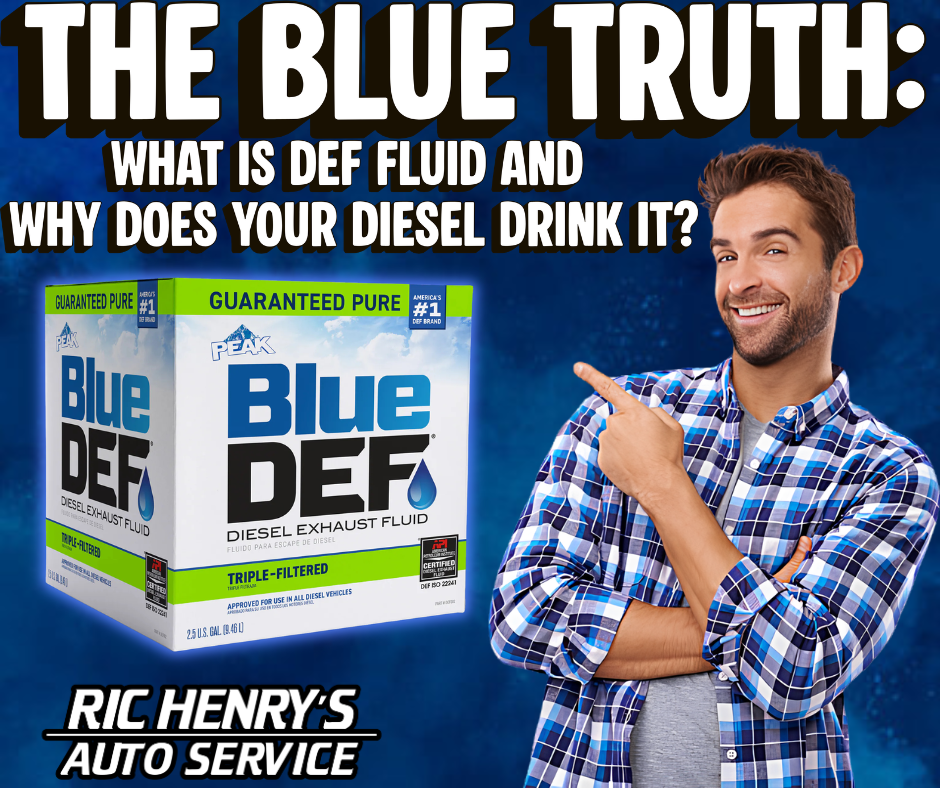
Unlock the mystery of DEF fluid and Selective Catalytic Reduction. Learn why your diesel drinks it and why Ric Henry's Auto Service is San Angelo's trusted dealership alternative for expert diesel care.
Why does brake fluid need changing in a closed system? Learn how hygroscopy lets water ruin your brakes, and trust Ric Henry's Auto Service in San Angelo for honest, dealership-level care.

Is your car's temperature gauge rising in traffic but dropping on the highway? Learn why this happens and why you should trust Ric Henry's Auto Service in San Angelo for honest cooling system repairs.
Does engine braking damage your car? Discover the truth about downshifting, rev-matching, and brake fade. Trust your vehicle to Ric Henry's Auto Service in San Angelo for expert care.
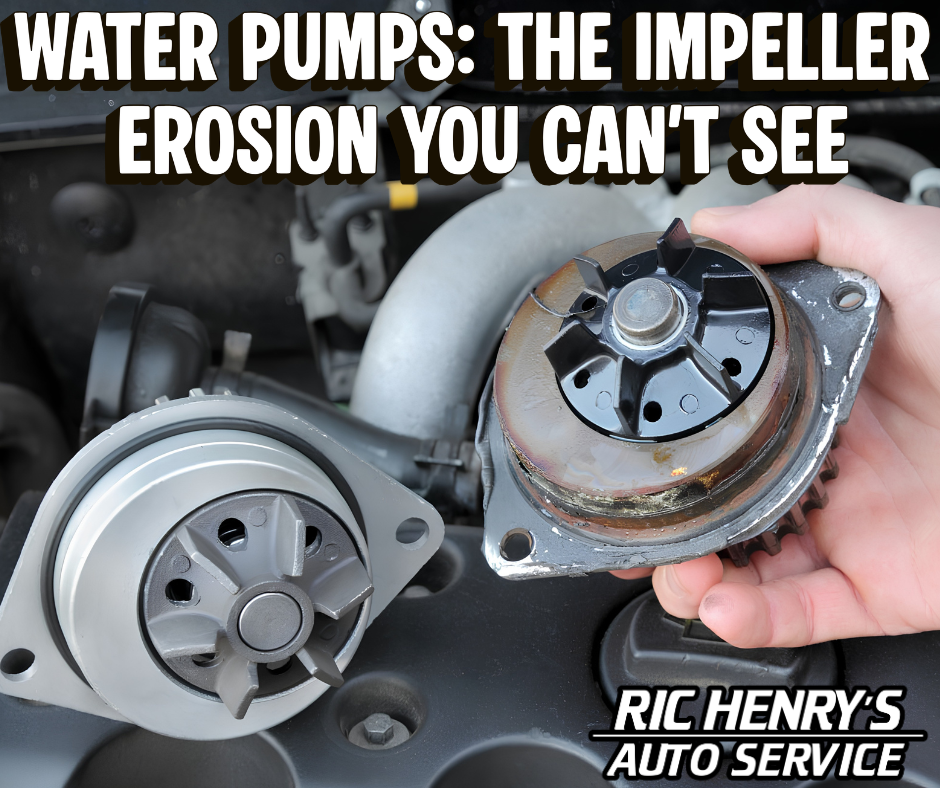
Water pump problems can hide behind impeller erosion and poor coolant circulation. Learn why San Angelo drivers trust Ric Henry's Auto Service for honest diagnostics, modern technology, and dealership-level care.

Is your modern car burning through oil? Discover the causes of excessive oil consumption in new engines and why San Angelo drivers trust Ric Henry's Auto Service, a legacy shop since 1966.

Stop asking, "Why do you need my VIN?" Learn the fascinating history of this 17-digit code, why it is critical for accurate repairs and recalls, and why we insist on it at Ric Henry's Auto Service, San Angelo's trusted dealership alternative since 1966.
Learn what the CAN Bus system does, warning signs of failure, and why San Angelo drivers trust Ric Henry’s Auto Service for honest, dealer-level diagnostics.
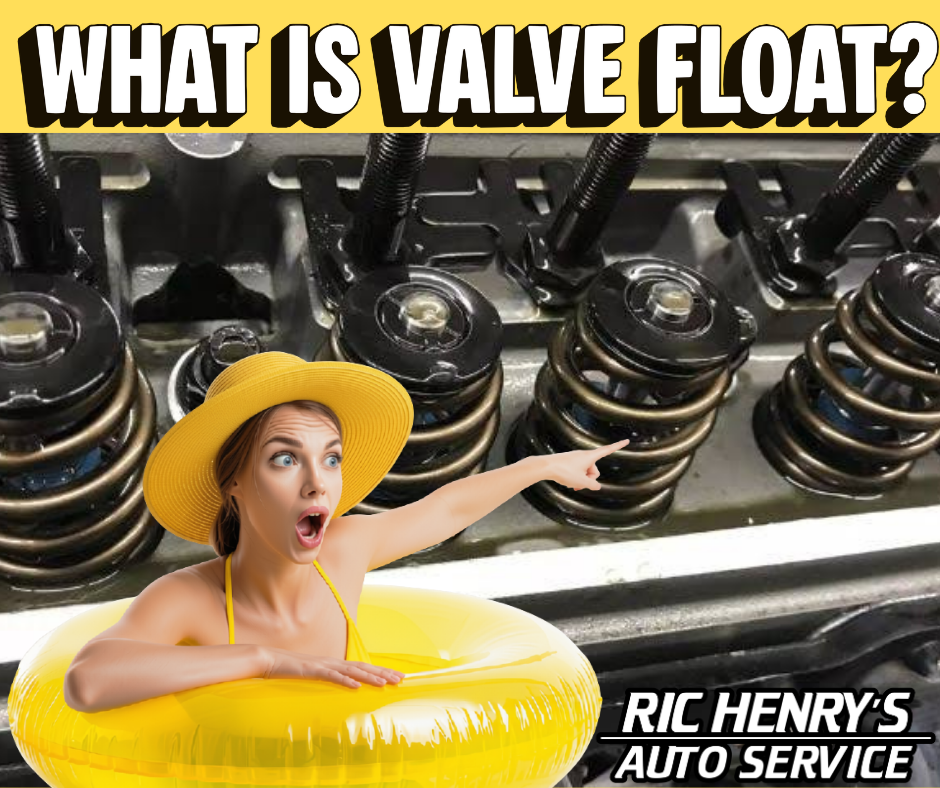
Learn what valve float is, its causes and warning signs, and how Ric Henry’s Auto Service provides trusted, modern engine diagnostics and repair for San Angelo drivers.