
Why Does My Turbo Whistle Differently in Spring?
NaTasha Brand • March 23, 2026
(And Why You Shouldn’t Ignore It)
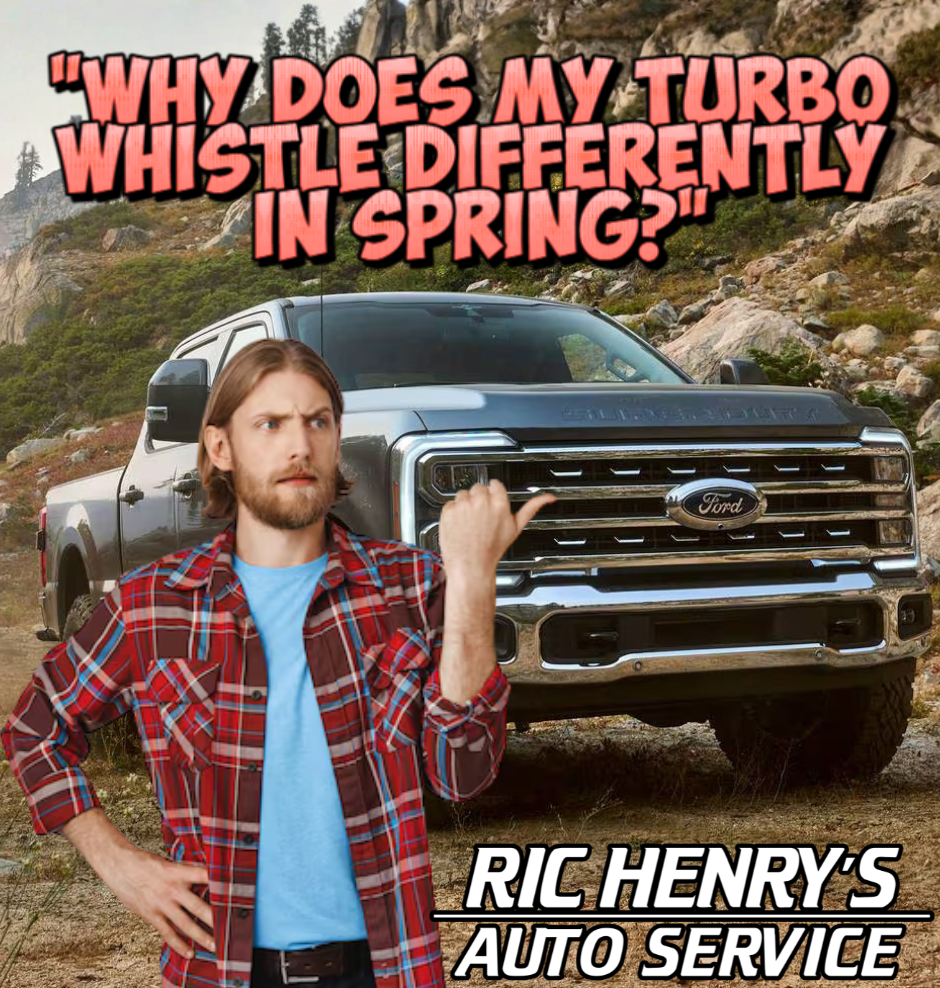
There’s a certain magic to spring in San Angelo. The bluebonnets start teasing the highways, the Concho River warms up enough for a kayak, and your turbocharged vehicle suddenly starts singing a new tune.
Unfortunately, it’s usually not a happy tune.
If you drive a turbocharged car, whether it’s a Ford EcoBoost truck, a Subaru WRX, a turbo diesel, or a European luxury sedan, you know the sound of a healthy turbo. It’s a satisfying, linear whistle that rises with the revs. But when spring rolls around, that whistle can change. Sometimes it’s louder. Sometimes it sounds like a police siren stuck in a traffic jam. Other times, it sounds like a deflating balloon trying to escape under your hood.
As an automotive blogger who has spent far too much time listening to engine bays instead of birds chirping, let me break down why your turbo’s voice cracks when the seasons change, and why a cheap fix now can save you from a catastrophic repair bill later.
The Winter Toll on Forced Induction
Winter in West Texas isn’t exactly the Arctic, but we get our fair share of freeze-thaw cycles. Those temperature swings are brutal on rubber. Under your hood, you have a network of hoses and gaskets that handle massive amounts of air pressure, sometimes 15 to 30 pounds per square inch.
Over the winter, those rubber boost hoses and vacuum lines contract in the cold. They get brittle. When you’re driving on slick roads or letting the truck idle to warm up, the constant thermal expansion works those components like a rubber band that’s been stretched one too many times.
Then spring hits. The temperature rises. The materials expand again, but now, they expand around the micro-cracks that formed in January.
That different whistle? That’s physics telling you something is loose, cracked, or stuck.
Three Reasons Your Spring Turbo Whistle Sounds Off
The Boost Leak (The "Whoosh" of Defeat)
If your turbo sounds louder than usual, or you hear a distinct whoosh when you let off the throttle, you likely have a boost leak. A small leak in a charge pipe coupler or a cracked intercooler end tank turns your engine bay into a poorly tuned wind instrument. The pitch changes because the system can’t build the pressure it’s supposed to. Your engine is working harder, but the power feels flat. That’s not spring fever; that’s a loss of efficiency.
The Sticky Wastegate (The "Siren" of Sorrow)
The wastegate is the turbo’s gatekeeper. It opens to let exhaust gas bypass the turbine, controlling the boost pressure. When the gate or the actuator arm gets sticky, often from corrosion or carbon buildup that worsened over winter’s high-idle periods, you get a high-pitched, oscillating siren sound under acceleration. If you hear this, your turbo is essentially having a panic attack. It doesn’t know when to let go, which can lead to over-boosting and a very expensive engine rebuild.
The Damaged Compressor Wheel (The "Grinder" of Grief)
This is the one nobody wants. If the whistle has turned into a metallic screech or a grinding noise, your compressor wheel (the fan inside the turbo that spins at over 100,000 RPM) may be damaged. This can happen if a foreign object made its way past the air filter or if the bearings started to fail due to sludgy oil from extended winter drain intervals. If this is your sound, stop driving. Immediately.
Why You Need a Shop That’s Evolving with the Industry
Here’s the thing about modern turbochargers: they aren’t like the turbos from the 1980s. Today’s engines are computers on wheels. You can’t just listen with a stethoscope and tighten a clamp anymore (though, sometimes, it is just a clamp).
You need a shop that has grown with the technology. A shop that started with carburetors but now speaks fluent CAN-bus diagnostics. You need a place that treats forced induction with the respect it deserves.
In San Angelo, that place is Ric Henry’s Auto Service.
When you bring your turbocharged vehicle to us, you aren’t getting a mechanic with a guess and a pry bar. You’re getting experienced technicians who use the same diagnostic tools and equipment that the dealerships use. We don’t just listen for the whistle; we perform a full system analysis, checking boost pressure, vacuum integrity, and wastegate actuation with the precision these modern engines require.
Comprehensive Care for the Whole Vehicle
Let’s be honest, a turbo is just one part of the machine. If you’re hearing a whistle, it’s a great excuse to have the rest of the vehicle checked out after a long winter. At Ric Henry’s, we offer comprehensive auto repair services. Whether it’s a minor fix like replacing a cracked silicone hose or a major overhaul involving turbo replacement and engine timing, our technicians are equipped to handle it.
We don’t cut corners. We use dealership-grade tools because that’s what it takes to ensure the repair is done right the first time. And because we believe in standing behind our work, every service we provide carries a 3-year or 36,000-mile warranty.
Think about that. Most shops will give you a handshake and a prayer. We give you three years of peace of mind.
Trust Your Car to the Experts
If your turbo is singing a different tune this spring, don’t ignore it. A boost leak won’t heal itself, and a sticky wastegate isn’t going to un-stick because you wish hard enough. These issues only get worse, and in the world of forced induction, "worse" usually means "expensive."
Trust your car to the hands that have been evolving with the industry. Trust the team that uses the same gear as the dealership but offers the service and warranty of a local business that actually cares about your safety.
Spring in San Angelo should be about enjoying the Concho Valley, not worrying about whether your turbo is about to launch its internals through the hood.
Bring your ride to Ric Henry’s Auto Service. Let us figure out if that whistle is a simple spring hiccup or a cry for help.

Is your car in Limp Mode? Learn why your vehicle limits power to protect the engine and why you should trust Ric Henry's Auto Service in San Angelo for honest diagnostics and dealer-level care.

Unlock the mystery of DEF fluid and Selective Catalytic Reduction. Learn why your diesel drinks it and why Ric Henry's Auto Service is San Angelo's trusted dealership alternative for expert diesel care.
Why does brake fluid need changing in a closed system? Learn how hygroscopy lets water ruin your brakes, and trust Ric Henry's Auto Service in San Angelo for honest, dealership-level care.

Is your car's temperature gauge rising in traffic but dropping on the highway? Learn why this happens and why you should trust Ric Henry's Auto Service in San Angelo for honest cooling system repairs.

Does engine braking damage your car? Discover the truth about downshifting, rev-matching, and brake fade. Trust your vehicle to Ric Henry's Auto Service in San Angelo for expert care.
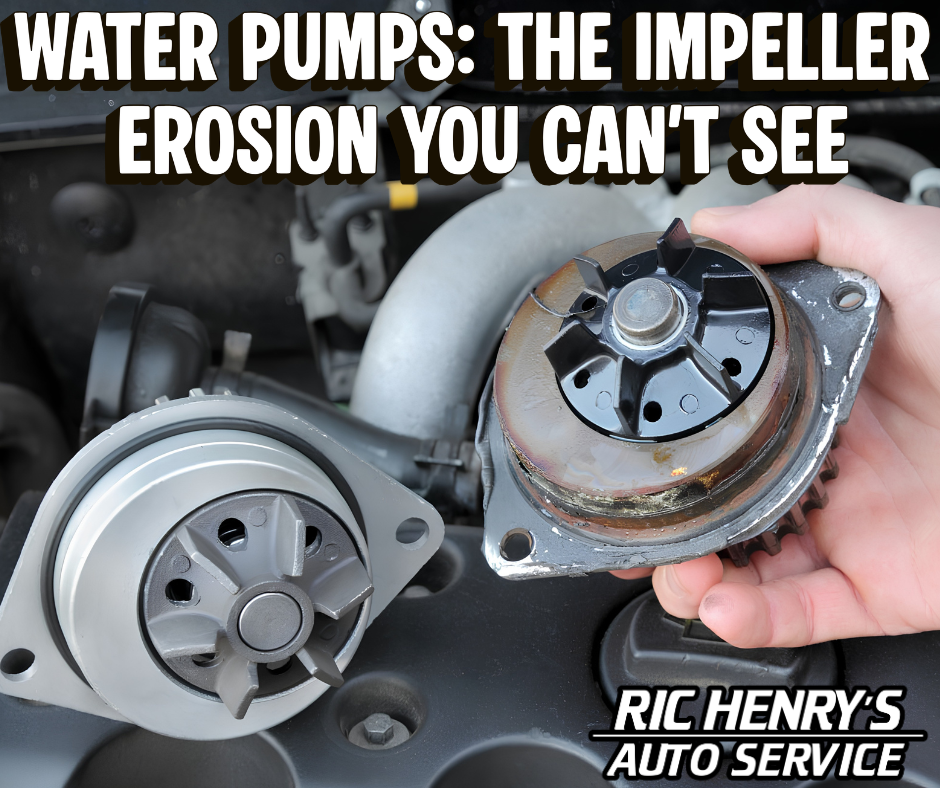
Water pump problems can hide behind impeller erosion and poor coolant circulation. Learn why San Angelo drivers trust Ric Henry's Auto Service for honest diagnostics, modern technology, and dealership-level care.

Is your modern car burning through oil? Discover the causes of excessive oil consumption in new engines and why San Angelo drivers trust Ric Henry's Auto Service, a legacy shop since 1966.

Stop asking, "Why do you need my VIN?" Learn the fascinating history of this 17-digit code, why it is critical for accurate repairs and recalls, and why we insist on it at Ric Henry's Auto Service, San Angelo's trusted dealership alternative since 1966.
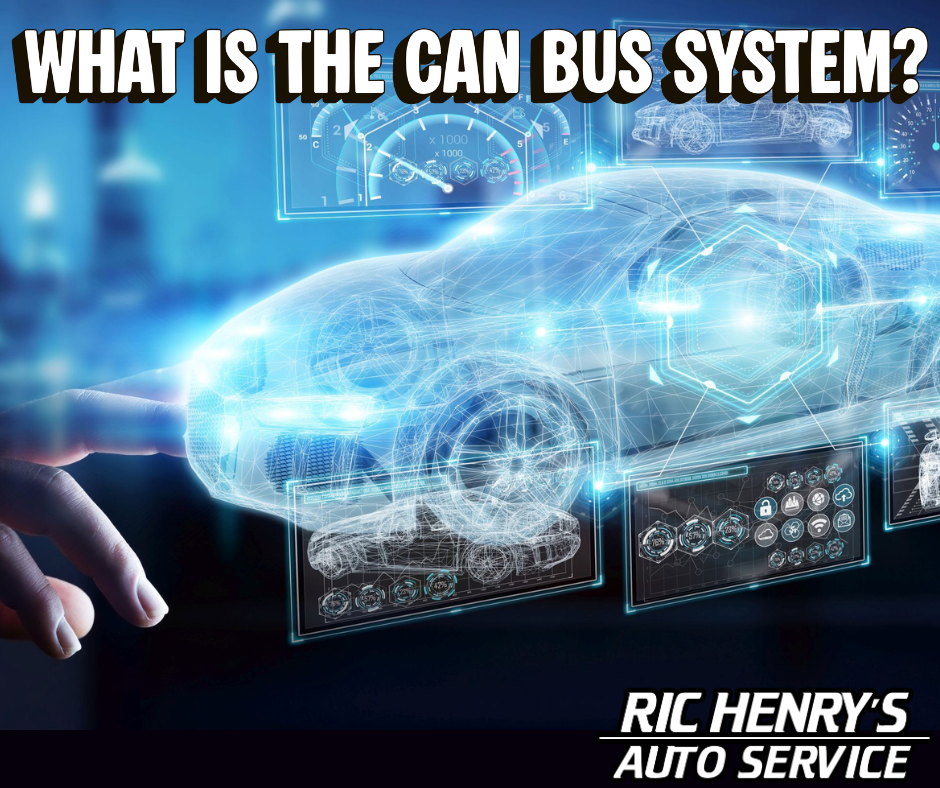
Learn what the CAN Bus system does, warning signs of failure, and why San Angelo drivers trust Ric Henry’s Auto Service for honest, dealer-level diagnostics.

Learn what valve float is, its causes and warning signs, and how Ric Henry’s Auto Service provides trusted, modern engine diagnostics and repair for San Angelo drivers.