
How Often Does a Differential need service?
NaTasha Brand • September 22, 2025
Ric Henry’s Auto Service: Your San Angelo Differential Experts

Out here in San Angelo, we know a thing or two about getting from point A to point B. Whether you're navigating the river confluence, cruising down Knickerbocker Road, or heading out to the ranch that feels like it’s actively trying to shake your truck apart, your vehicle is working hard. And there’s one hard-working component that most folks forget about until it starts singing the song of its people: a very expensive, very sad song.
We’re talking about your differential. That mysterious pumpkin-shaped lump nestled between your rear wheels (or in the middle if you have 4WD).
What in the World Does a Differential Do?
Imagine two of your friends running a three-legged race. Now imagine they have to go around a corner. The poor soul on the inside has to take tiny steps while the one on the outside has to take giant ones. If their legs were tied together, they’d faceplant right in the middle of the field day.
Your wheels are the same. In a turn, the outside wheel has to travel a longer distance and spin faster than the inside wheel. The differential is the mechanical genius that allows this to happen smoothly. It’s the ultimate mediator, splitting the engine’s power and allowing the wheels to turn at different speeds. No differential, no turning without tire screeching and a whole lot of unhappy mechanical noises.
Why Does This Genius Need a Fluid Change?
Inside that "pumpkin" is a set of precisely machined gears (ring and pinion, for the curious) constantly meshing under immense pressure. Differential fluid (a thick, heavy gear oil) is its lifeblood. It does three critical jobs:
1. Lubricates: It prevents metal-on-metal contact, keeping those gears shiny and happy.
2. Cools: All that friction and power transfer generates serious heat, especially pulling a trailer through a Texas summer. The fluid absorbs and dissipates that heat.
3. Cleans: It suspends tiny metal shavings and contaminants created by normal wear and tear, carrying them to the magnet on the drain plug.
Over time and miles, this fluid breaks down. It loses its lubricity, gets contaminated with metal particles, and can’t handle heat as well. When that happens, your differential is running on hopes and dreams instead of gear oil.
What Happens if You Ghost Your Differential?
Neglect this service, and you’re playing a very costly game of chicken with physics. The fluid gets gloppy, gritty, and useless. The gears start grinding themselves into expensive metallic confetti. You’ll hear it before it fully goes, a low whirring or howling noise that gets louder when you accelerate, and might change on deceleration or turns.
Eventually, the gears will weld themselves together or shatter. The result? A completely seized drivetrain. You’re not going anywhere, and you’re facing a repair bill that could easily run into the thousands for a new or rebuilt differential. It’s the automotive equivalent of needing a heart transplant because you refused to drink water.
So, How Often Does It Really Need Service?
This is the million-dollar question. The old-school rule of thumb was every 30,000 to 50,000 miles. But with modern synthetic fluids, many manufacturers have extended that interval. Some even say it’s “lifetime” fluid.
Let’s be clear: there’s no such thing as “lifetime” fluid. “Lifetime” to a car company often means “the lifetime of the warranty.” If you plan on keeping your truck or SUV for the long haul, through countless San Angelo summers and winters, you need to change it.
A good, conservative, and safe bet for most drivers is to have it serviced every 60,000 miles. However, if you fall into the “Severe Service” category, which includes most of us in West Texas who do any towing, hauling, ranch work, off-roading, or frequent driving on dusty dirt roads, you should cut that interval in half. Every 30,000 miles is cheap insurance.
Ric Henry’s Auto Service: Your San Angelo Differential Experts
Wondering when your diff last had a sip of fresh gear oil? The team at Ric Henry’s Auto Service is here to help. Our experienced technicians can check your fluid’s condition and your manufacturer’s recommendations, and get you taken care of with the right high-quality fluid for your vehicle.
We use the same professional tools and equipment as the dealership, and we back every differential service with our unbeatable 3-Year/36,000-Mile Warranty, because we believe in doing the job right.
So, don’t wait for the howl. Give your differential the love it deserves, and it’ll keep you turning corners smoothly for years to come.

Is your car in Limp Mode? Learn why your vehicle limits power to protect the engine and why you should trust Ric Henry's Auto Service in San Angelo for honest diagnostics and dealer-level care.

Unlock the mystery of DEF fluid and Selective Catalytic Reduction. Learn why your diesel drinks it and why Ric Henry's Auto Service is San Angelo's trusted dealership alternative for expert diesel care.
Why does brake fluid need changing in a closed system? Learn how hygroscopy lets water ruin your brakes, and trust Ric Henry's Auto Service in San Angelo for honest, dealership-level care.

Is your car's temperature gauge rising in traffic but dropping on the highway? Learn why this happens and why you should trust Ric Henry's Auto Service in San Angelo for honest cooling system repairs.
Does engine braking damage your car? Discover the truth about downshifting, rev-matching, and brake fade. Trust your vehicle to Ric Henry's Auto Service in San Angelo for expert care.
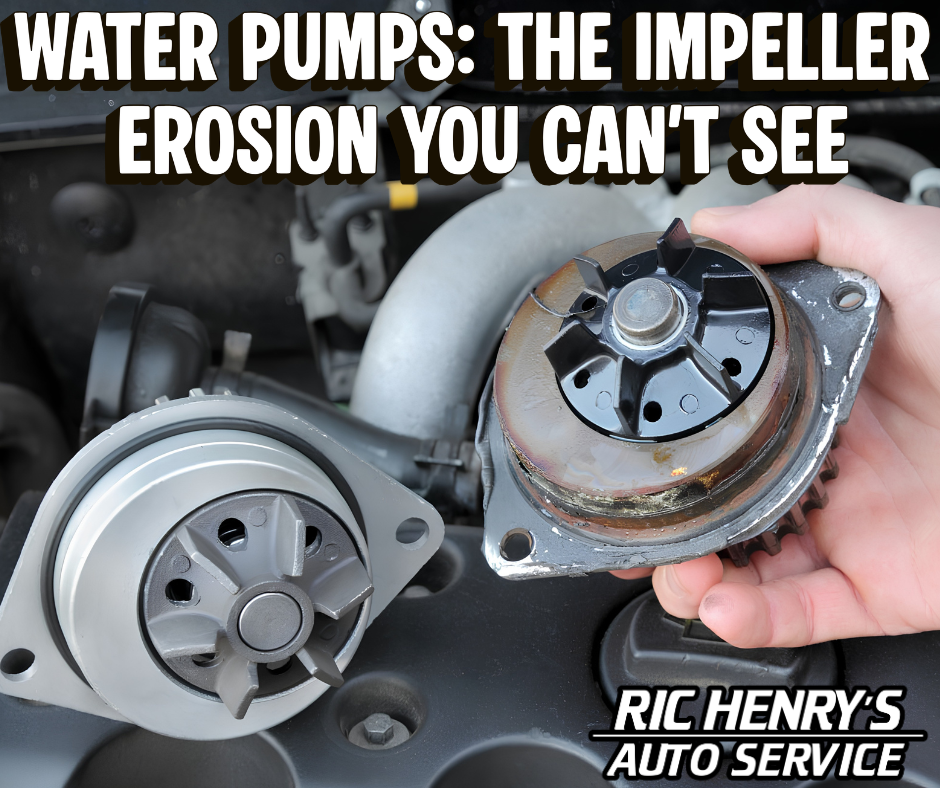
Water pump problems can hide behind impeller erosion and poor coolant circulation. Learn why San Angelo drivers trust Ric Henry's Auto Service for honest diagnostics, modern technology, and dealership-level care.

Is your modern car burning through oil? Discover the causes of excessive oil consumption in new engines and why San Angelo drivers trust Ric Henry's Auto Service, a legacy shop since 1966.

Stop asking, "Why do you need my VIN?" Learn the fascinating history of this 17-digit code, why it is critical for accurate repairs and recalls, and why we insist on it at Ric Henry's Auto Service, San Angelo's trusted dealership alternative since 1966.
Learn what the CAN Bus system does, warning signs of failure, and why San Angelo drivers trust Ric Henry’s Auto Service for honest, dealer-level diagnostics.
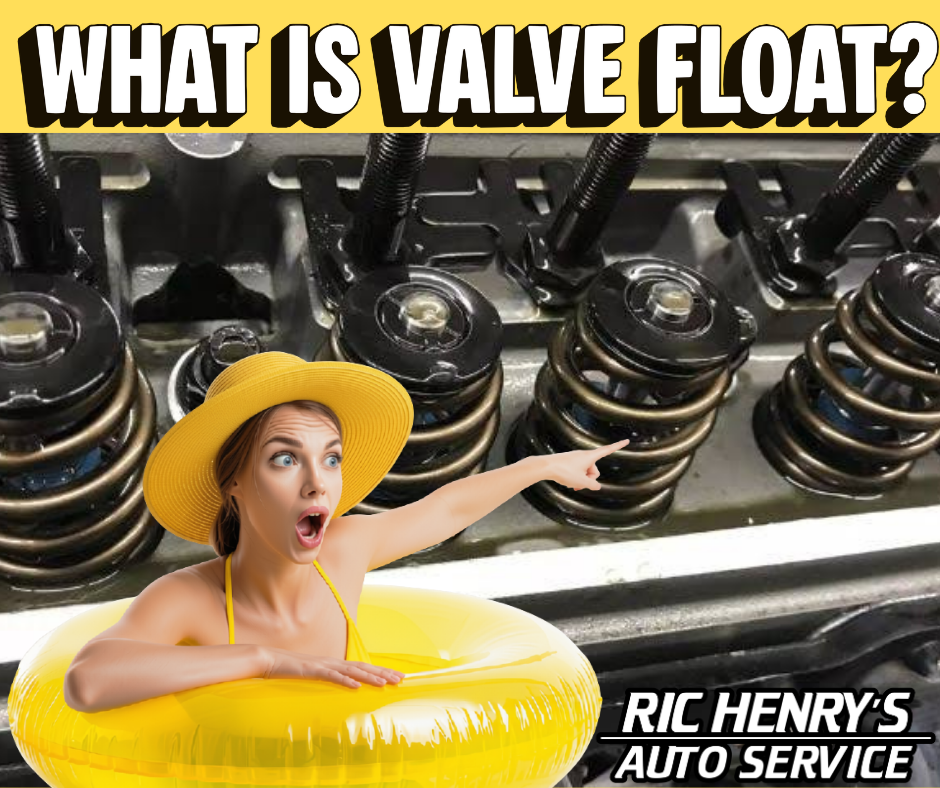
Learn what valve float is, its causes and warning signs, and how Ric Henry’s Auto Service provides trusted, modern engine diagnostics and repair for San Angelo drivers.