
Is Your Car Dragging Its Feet? A Guide to Sticking Brake Calipers
NaTasha Brand • October 27, 2025
What Does a Brake Caliper Actually Do?
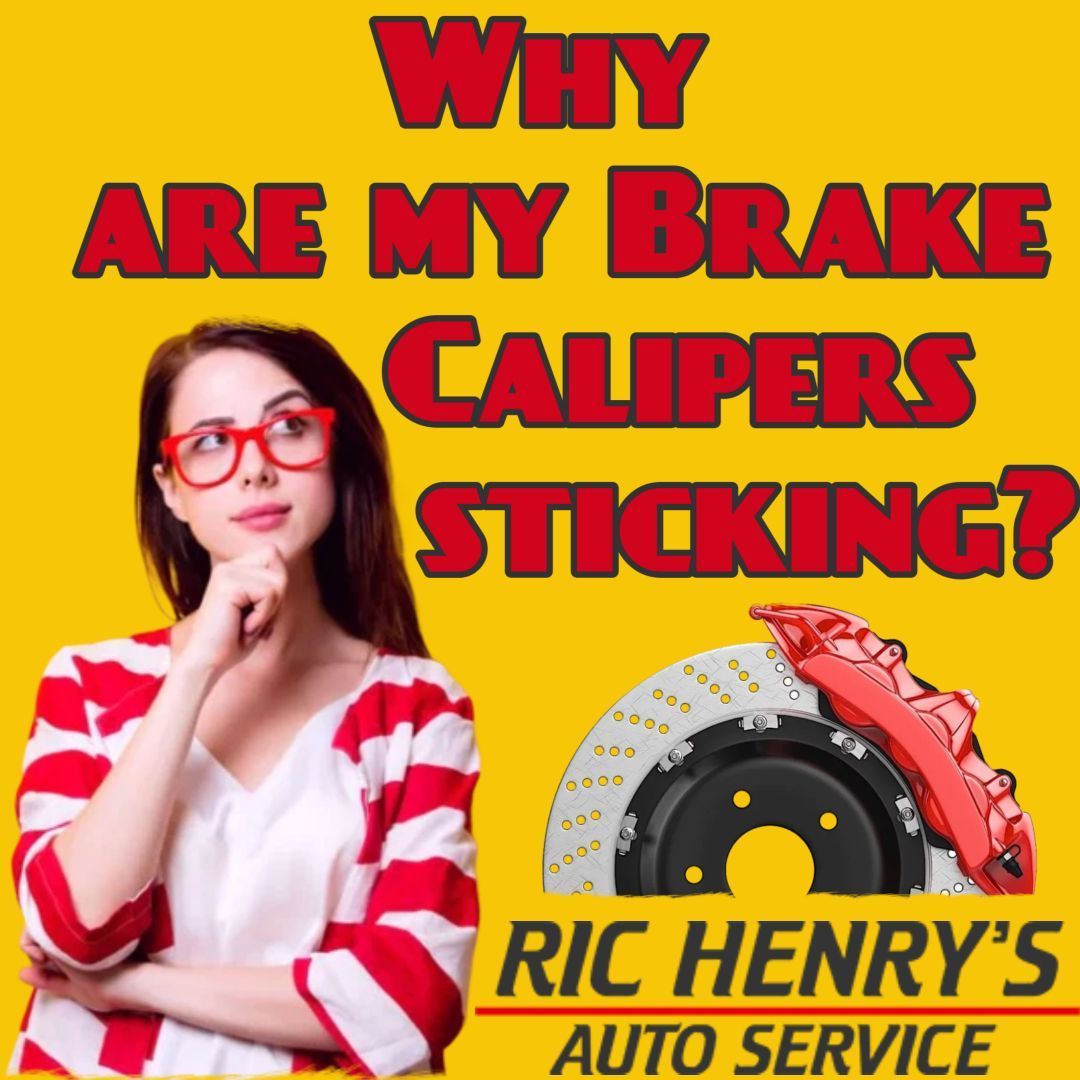
Let’s talk about one of your car's most dramatic performers: the brake caliper. This unsung hero doesn’t get the glamour of a shiny new paint job or the roar of a powerful engine, but when it decides to throw a tantrum, you’ll know all about it. Especially when you’re cruising down the Houston Harte or trying to beat the light on Bryant Blvd., a sticking brake caliper isn’t just an annoyance, it’s a safety hazard and a wallet-drainer.
Today, we’re diving deep into the world of the sticky caliper. We’ll cover what it is, how to spot its cry for attention, and what to do when it happens here in San Angelo.
The Unlikely Hero: What Does a Brake Caliper Actually Do?
Think of your brake system as a symphony. You press the pedal (the conductor), and a series of events unfold. Hydraulic fluid (the music) travels through the lines, and its pressure commands the brake caliper to act.
The caliper itself is a relatively simple but crucial clamp. It straddles your brake rotor (that shiny, silver disc you can sometimes see behind your wheel) and contains two key components:
1. The Piston: Forced out by the brake fluid pressure when you press the pedal.
2. The Brake Pads: The friction material the piston squeezes against the rotor.
When you hit the brake, the piston pushes the brake pads onto the spinning rotor, creating immense friction and converting your car’s kinetic energy into heat, thereby slowing you down. It’s a brilliant, violent, and essential process.
The Tantrum: Tell-Tale Signs Your Caliper is Sticking
A "sticking" caliper is one that either doesn’t fully release the brake pad from the rotor when you let off the pedal, or it fails to apply pressure evenly. Here’s how it announces its presence:
1. The Car Pulls to One Side: This is the #1 giveaway. When braking, if your car consistently veers sharply to the left or right, it’s a strong indicator that the caliper on that side is sticking and applying more braking force than its counterpart. It’s like your car has a favorite side of the road.
2. The Distinctive Hot & Smelly Aroma: A sticking caliper is constantly creating friction, which means it’s constantly generating heat. After a normal drive, if you smell a sharp, acrid burning odor from one wheel (and we’re not talking about the scent of mesquite from the food trucks), that’s a red flag. Carefully approach the wheel and feel for intense radiant heat. Caution: Don't touch the wheel or rotor!
3. Unusual Grumbling or Dragging Noises: You might hear a constant, low-frequency grinding or rubbing sound that changes with your speed, even when your foot is off the brake. It’s the sound of your brake pad having an unwanted, permanent playdate with your rotor.
4. Your Fuel Economy Takes a Nosedive: Is your gas gauge dropping faster than usual? A stuck caliper is essentially like driving with your foot lightly on the brake all the time. Your engine has to work much harder to overcome that constant drag, burning more fuel in the process.
5. Uneven Brake Pad Wear or Excessive Dust: During a tire rotation or when you just happen to look, you might notice that the inner brake pad on one wheel is significantly more worn than the outer pad, or more worn than the pads on the other side of the car. You might also see more black brake dust on one wheel compared to the others.
The Fix: From a Simple Slide to a Full Replacement
So, your caliper is staging a sit-in. What now?
• The Simple Fix (The Clean and Lube): Sometimes, the issue is just a stuck or corroded slide pin. These pins allow the caliper to float back and forth. A technician can clean and re-lubricate them with high-temperature grease, which often solves the problem. It’s the equivalent of giving the caliper a good talking-to.
• The Common Fix (The Rebuild/Replacement): More often, the piston seal inside the caliper has deteriorated, or the piston itself is corroded. In this case, the caliper either needs to be rebuilt with a new seal and piston boot or, more commonly and reliably, replaced entirely with a new or quality remanufactured unit. This is almost always a job for a professional, as it involves the critical hydraulic brake system.
Why Trust Ric Henry's Auto Service With Your Brakes in San Angelo?
When your safety is on the line, you don’t trust your brakes to just anyone. At Ric Henry's Auto Service, we get it. We’re your neighbors, and we drive the same dusty, sun-baked roads you do.
• Our experienced technicians are equipped to handle everything from a simple brake service to a complete caliper replacement, using the same premium tools and equipment the dealerships use.
• We offer comprehensive auto repair services, so while we’re fixing your brakes, we can check your alignment, tires, and other critical systems to ensure everything is in top shape for West Texas driving.
• Most importantly, we stand behind our work. Every service we provide comes with a robust 3-year/36,000-mile warranty for your peace of mind.
Don't let a sticking caliper compromise your safety and cost you more in the long run. If you’re experiencing any of these symptoms, it’s time to stop by and see us.

Is your car in Limp Mode? Learn why your vehicle limits power to protect the engine and why you should trust Ric Henry's Auto Service in San Angelo for honest diagnostics and dealer-level care.

Unlock the mystery of DEF fluid and Selective Catalytic Reduction. Learn why your diesel drinks it and why Ric Henry's Auto Service is San Angelo's trusted dealership alternative for expert diesel care.
Why does brake fluid need changing in a closed system? Learn how hygroscopy lets water ruin your brakes, and trust Ric Henry's Auto Service in San Angelo for honest, dealership-level care.

Is your car's temperature gauge rising in traffic but dropping on the highway? Learn why this happens and why you should trust Ric Henry's Auto Service in San Angelo for honest cooling system repairs.
Does engine braking damage your car? Discover the truth about downshifting, rev-matching, and brake fade. Trust your vehicle to Ric Henry's Auto Service in San Angelo for expert care.
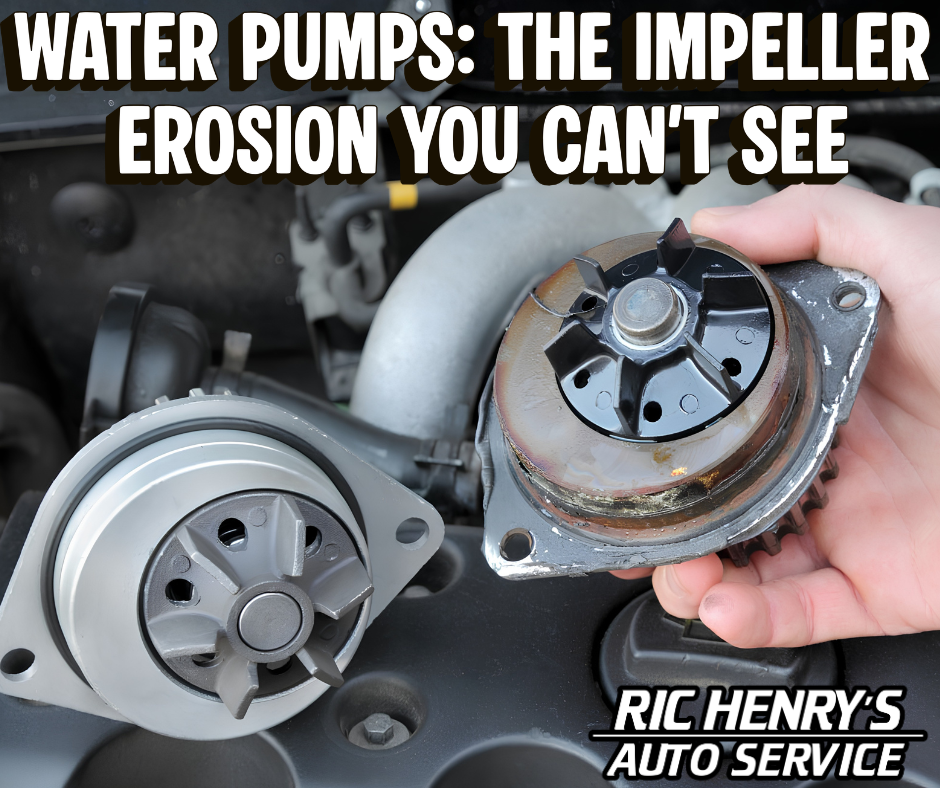
Water pump problems can hide behind impeller erosion and poor coolant circulation. Learn why San Angelo drivers trust Ric Henry's Auto Service for honest diagnostics, modern technology, and dealership-level care.
Is your modern car burning through oil? Discover the causes of excessive oil consumption in new engines and why San Angelo drivers trust Ric Henry's Auto Service, a legacy shop since 1966.

Stop asking, "Why do you need my VIN?" Learn the fascinating history of this 17-digit code, why it is critical for accurate repairs and recalls, and why we insist on it at Ric Henry's Auto Service, San Angelo's trusted dealership alternative since 1966.
Learn what the CAN Bus system does, warning signs of failure, and why San Angelo drivers trust Ric Henry’s Auto Service for honest, dealer-level diagnostics.
Learn what valve float is, its causes and warning signs, and how Ric Henry’s Auto Service provides trusted, modern engine diagnostics and repair for San Angelo drivers.