
V Engines
NaTasha Brand • September 10, 2025
From the Mighty V6 to the Colossal V12
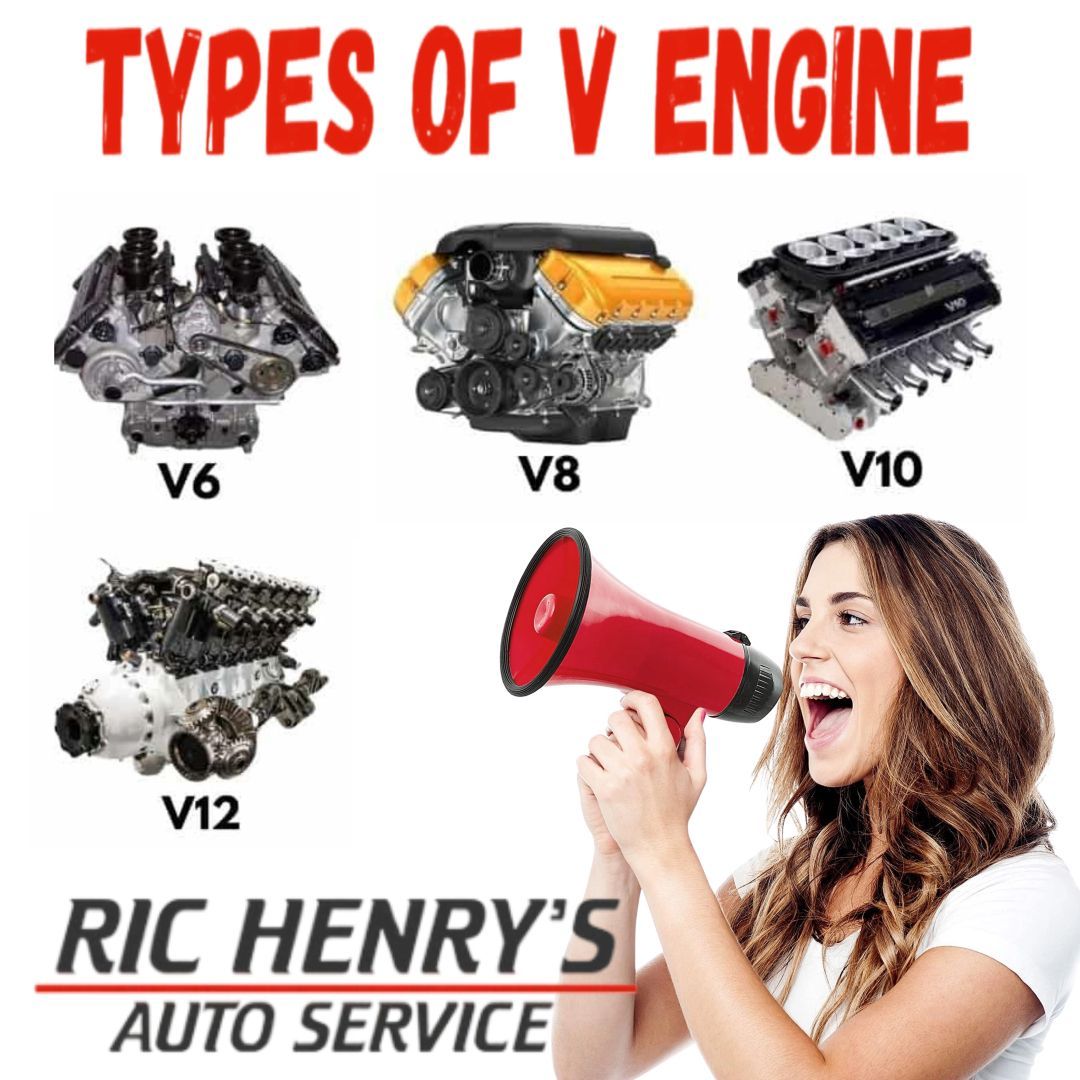
In the heart of every performance machine, there's a symphony of pistons and combustion. And while the humble inline-four is the workhorse of the world, the true rockstars of the engine bay often arrange their cylinders in a glorious "V." For gearheads in San Angelo, where the open road calls for both power and reliability, understanding these engineering marvels is key.
At Ric Henry's Auto Service, we appreciate all engines, but there's something special about the balance of power and packaging that a V-configuration provides. Let's pop the hood and explore the different types of V engines, their history, and where you can find these mechanical symphonies today.
The "V" Explained: Why the Angle?
The core idea behind a V engine is simple: by arranging two banks of cylinders at an angle to each other (forming a "V" when viewed from the front), engineers can create a more compact, rigid, and powerful engine than an equivalent inline design. This allows for more cylinders—and thus more power—to be fit into a smaller space, a critical advantage under the long hood of a modern vehicle.
The Contenders: A Lineup of Power
The V6: The Balanced All-Rounder
The Layout:
Two banks of three cylinders. Common bank angles are 60 or 90 degrees.
History & Performance
: Gained massive popularity in the 1980s as a powerful and space-efficient front-wheel-drive alternative to the bulky V8. Modern V6s are technological powerhouses, often turbocharged, producing power that would have embarrassed top-tier V8s from a few decades ago. They offer a fantastic blend of power, efficiency, and smoothness.
Where You'll Find It:
Truly everywhere. From rugged trucks (like many Ford F-150s) and powerful SUVs (Nissan Pathfinder, Toyota Highlander) to sleek sedans (Honda Accord, Chrysler 300) and even sports cars (the Nissan GT-R, ironically, uses a V6 to scare V8s).
The V8: The American Icon
The Layout:
Two banks of four cylinders, typically at a 90-degree angle.
History & Performance:
The heartbeat of American muscle. From the classic small-blocks of the 60s to the supercharged beasts of today, the V8 is renowned for its earth-moving torque, iconic rumbling exhaust note (thanks to its firing order), and relentless power delivery. It's the definition of "brute force with sophistication."
Where You'll Find It:
In the vehicles that define Texan roads. The Chevrolet Silverado, Ford Mustang, Dodge Charger/Challenger, and countless luxury SUVs from Cadillac and Lincoln. It’s the king of the truck world and the soul of the performance world.
The V10: The Exotic Workhorse
The Layout
: Two banks of five cylinders. It's essentially a V8 with two extra cylinders tacked on.
History & Performance:
A rare breed that serves two masters. In supercars like the Lamborghini Huracán, it's a high-revving, screaming masterpiece of engineering. In heavy-duty trucks like the now-discontinued Dodge Viper and Ford Excursion, it was all about massive, tire-spinning torque for towing and hauling. It's an unbalanced configuration by nature (a five-cylinder bank can't be naturally balanced like a four or six), which gives it a unique, aggressive character.
Where You'll Find It:
These are becoming rarer. Your best bet is an exotic car dealership or spotting an older Dodge Ram 2500/3500 truck rumbling around town.
The V12: The Pinnacle of Smoothness
The Layout:
Two inline-six engines mated together on a common crankshaft.
History & Performance:
The ultimate symbol of automotive prestige and engineering excess. Because it's essentially two perfectly balanced inline-six engines, a V12 is inherently balanced and can be incredibly smooth, with buttery power delivery and an unmistakable, high-class whine. It's not about brute force alone; it's about delivering immense power with unparalleled refinement.
Where You'll Find It:
In the upper echelons of luxury and performance. Think Ferrari, Lamborghini, Aston Martin, and the flagship sedans from Mercedes-Benz and BMW. If you see one in San Angelo, you've spotted a true unicorn.
Why Trust Ric Henry's with Your Engine—V or Otherwise?
Whether your daily driver has a humble four-cylinder or a rumbling V8, it deserves expert care. At Ric Henry's Auto Service, our experienced technicians are equipped to handle a wide range of repairs, from minor fixes to major overhauls.
We use the same advanced tools and equipment that dealerships use to properly diagnose and service these complex powerplants. And no matter what engine you have, every service we perform is backed by our 3-year/36,000-mile nationwide warranty—because we believe in doing the job right, the first time.
So, whether you're driving a V6, V8, or something even more exotic, remember: the goal is to keep that symphony playing smoothly for miles to come.

Is your car in Limp Mode? Learn why your vehicle limits power to protect the engine and why you should trust Ric Henry's Auto Service in San Angelo for honest diagnostics and dealer-level care.

Unlock the mystery of DEF fluid and Selective Catalytic Reduction. Learn why your diesel drinks it and why Ric Henry's Auto Service is San Angelo's trusted dealership alternative for expert diesel care.
Why does brake fluid need changing in a closed system? Learn how hygroscopy lets water ruin your brakes, and trust Ric Henry's Auto Service in San Angelo for honest, dealership-level care.

Is your car's temperature gauge rising in traffic but dropping on the highway? Learn why this happens and why you should trust Ric Henry's Auto Service in San Angelo for honest cooling system repairs.
Does engine braking damage your car? Discover the truth about downshifting, rev-matching, and brake fade. Trust your vehicle to Ric Henry's Auto Service in San Angelo for expert care.
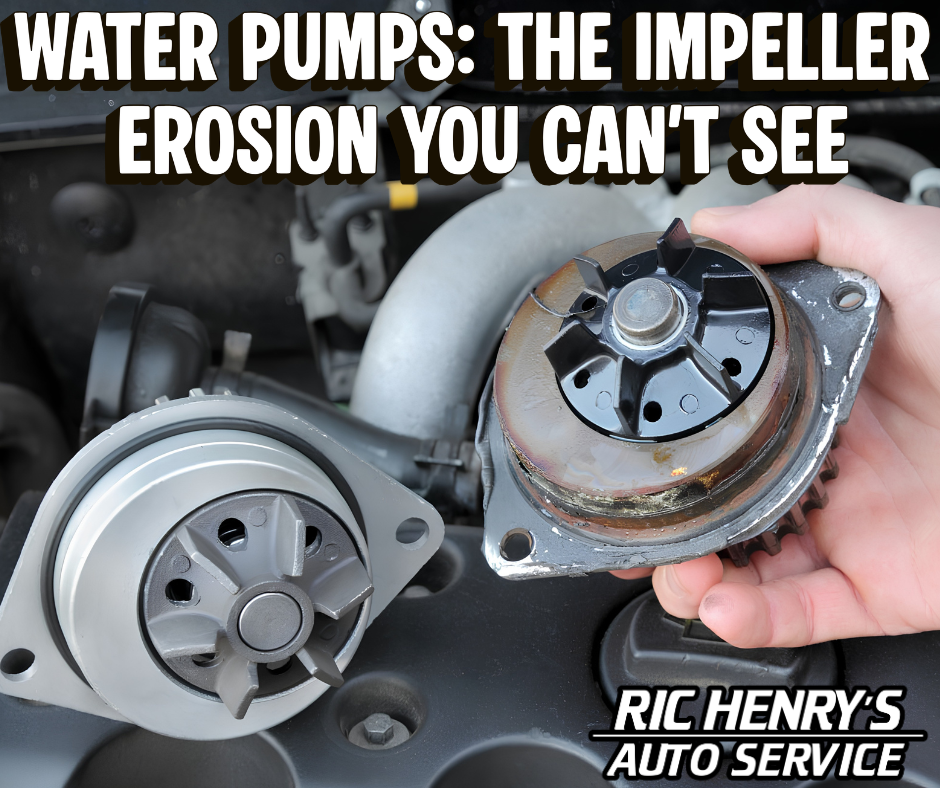
Water pump problems can hide behind impeller erosion and poor coolant circulation. Learn why San Angelo drivers trust Ric Henry's Auto Service for honest diagnostics, modern technology, and dealership-level care.

Is your modern car burning through oil? Discover the causes of excessive oil consumption in new engines and why San Angelo drivers trust Ric Henry's Auto Service, a legacy shop since 1966.

Stop asking, "Why do you need my VIN?" Learn the fascinating history of this 17-digit code, why it is critical for accurate repairs and recalls, and why we insist on it at Ric Henry's Auto Service, San Angelo's trusted dealership alternative since 1966.
Learn what the CAN Bus system does, warning signs of failure, and why San Angelo drivers trust Ric Henry’s Auto Service for honest, dealer-level diagnostics.
Learn what valve float is, its causes and warning signs, and how Ric Henry’s Auto Service provides trusted, modern engine diagnostics and repair for San Angelo drivers.