
The Top 5 Questions to Ask Before Buying Your Next Ride
NaTasha Brand • August 27, 2025
(And Why Ric Henry is Your Secret Weapon)

So, you’re ready to join the parade of trucks and SUVs cruising down Knickerbocker or heading out to Lake Nasworthy. Buying a new car is a Texas-sized thrill. That new-car smell? It’s the scent of possibility. That flawless paint job? It’s a masterpiece under the West Texas sun.
But hold your horses (or, more appropriately, your horsepower) before you sign on the dotted line. That gleaming beauty on the lot might be hiding a few skeletons in its closet—or, more accurately, in its transmission. A new car is one of the biggest investments you'll make, second only to your house. You wouldn't buy a house without an inspection, right? The same ironclad logic applies to your next vehicle.
Before you invest, arm yourself with these top 5 questions. And more importantly, learn why a pre-purchase inspection from your local experts at Ric Henry's Auto Service is the smartest first stop on your car-buying journey.
1. "What's Your Real-World History?" (Beyond the CarFax)
Anyone can print a CarFax report. But does it show that the previous owner loved curbs more than their own children, leading to hidden alignment issues? Does it detail the subtle whine of a transmission that’s been worked harder than a ranch hand during cattle season? A history report is a good start, but it’s not the whole story. A trained technician gets under the car and reads the real story written in the grease, wear patterns, and slight vibrations.
2. "How Do You Handle a San Angelo Summer?"
We don't just get hot; we get Concho Valley inferno hot. Your cooling system, battery, and AC aren't luxuries here—they are matters of survival. A thorough inspection will stress-test these systems to ensure they can handle the relentless heat that can turn a weak battery into a paperweight and make a struggling AC unit blow air that's as warm as a friendly "howdy."
3. "Are You Hiding Any 'Character'?" (Aka, Costly Repairs)
That slight shudder when braking? The mysterious drip on the pavement? A dealer might call it "character." Our technicians at Ric Henry’s call it "a worn rotor" or "a leaking seal." We use the same advanced tools and equipment the dealerships do to perform a comprehensive bumper-to-bumper health check. We’ll identify not just what’s wrong now, but what’s likely to go wrong down the road, saving you from nasty financial surprises.
4. "What's This Going to Cost Me in 10,000 Miles?"
The purchase price is just the entry fee. The real cost of ownership is in maintenance and repairs. Is it a quirky European import that requires specialty parts that have to be shipped from overseas? Or is it a domestic workhorse with readily available, affordable parts? Our experienced team can give you a realistic forecast of future service needs and costs, helping you budget for the long haul on West Texas highways.
5. "Who's Got My Back After the Sale?"
A dealership's warranty might look good on paper, but what’s the real-world service experience like? Here’s the Ric Henry’s advantage: when we do your pre-purchase inspection, you get to experience our professional, no-nonsense service firsthand. And if you choose us for future care, every service we provide—from an oil change to a major overhaul—comes backed by a robust 3-year/36,000-mile warranty. That’s peace of mind you can take to the bank, and all the way to Sonora and back.
The Ric Henry's Difference: Your Expert Second Opinion
A pre-purchase inspection isn’t about distrust; it’s about due diligence. It’s your negotiating superpower, your financial safeguard, and your guarantee that your new pride and joy won’t become your newest money pit.
Let our team put the vehicle you’re considering on a lift and give it the white-glove treatment. We’ll provide you with a detailed, unbiased report on its true condition, giving you the confidence to walk away or negotiate like a pro.
Don't gamble on your investment. Call Ric Henry's Auto Service today to schedule your pre-purchase inspection. Think of it as a test drive for the parts you can’t see.
After all, the only thing that should be left to chance on a new car is whether you choose the racing red or the beautiful black.

Is your car in Limp Mode? Learn why your vehicle limits power to protect the engine and why you should trust Ric Henry's Auto Service in San Angelo for honest diagnostics and dealer-level care.

Unlock the mystery of DEF fluid and Selective Catalytic Reduction. Learn why your diesel drinks it and why Ric Henry's Auto Service is San Angelo's trusted dealership alternative for expert diesel care.
Why does brake fluid need changing in a closed system? Learn how hygroscopy lets water ruin your brakes, and trust Ric Henry's Auto Service in San Angelo for honest, dealership-level care.

Is your car's temperature gauge rising in traffic but dropping on the highway? Learn why this happens and why you should trust Ric Henry's Auto Service in San Angelo for honest cooling system repairs.
Does engine braking damage your car? Discover the truth about downshifting, rev-matching, and brake fade. Trust your vehicle to Ric Henry's Auto Service in San Angelo for expert care.
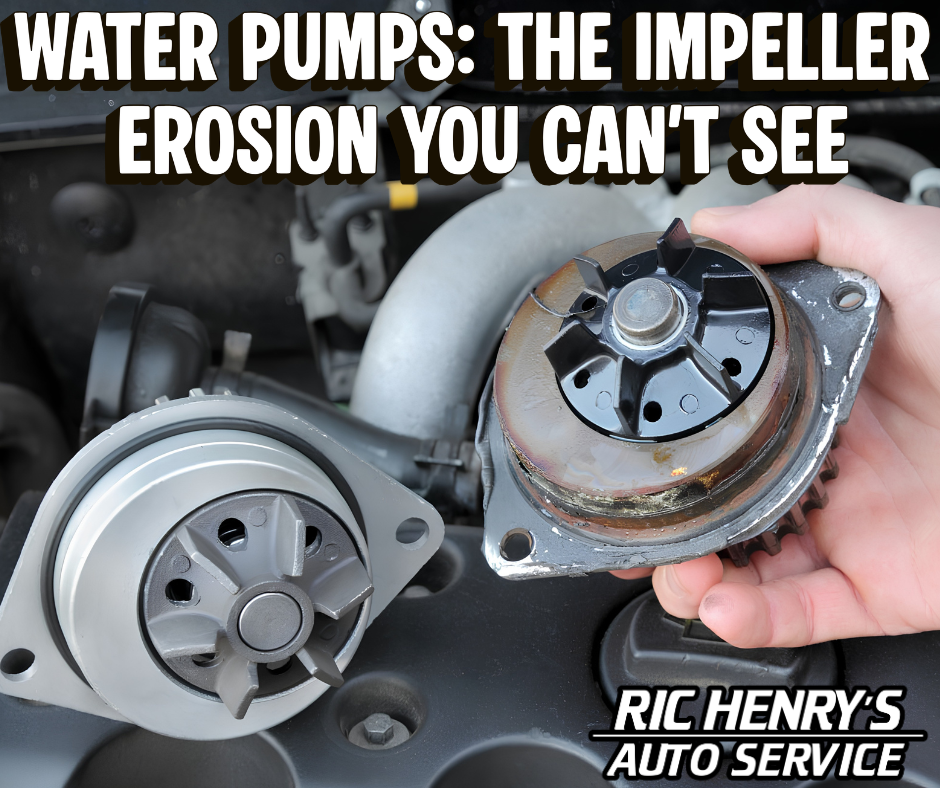
Water pump problems can hide behind impeller erosion and poor coolant circulation. Learn why San Angelo drivers trust Ric Henry's Auto Service for honest diagnostics, modern technology, and dealership-level care.

Is your modern car burning through oil? Discover the causes of excessive oil consumption in new engines and why San Angelo drivers trust Ric Henry's Auto Service, a legacy shop since 1966.

Stop asking, "Why do you need my VIN?" Learn the fascinating history of this 17-digit code, why it is critical for accurate repairs and recalls, and why we insist on it at Ric Henry's Auto Service, San Angelo's trusted dealership alternative since 1966.
Learn what the CAN Bus system does, warning signs of failure, and why San Angelo drivers trust Ric Henry’s Auto Service for honest, dealer-level diagnostics.
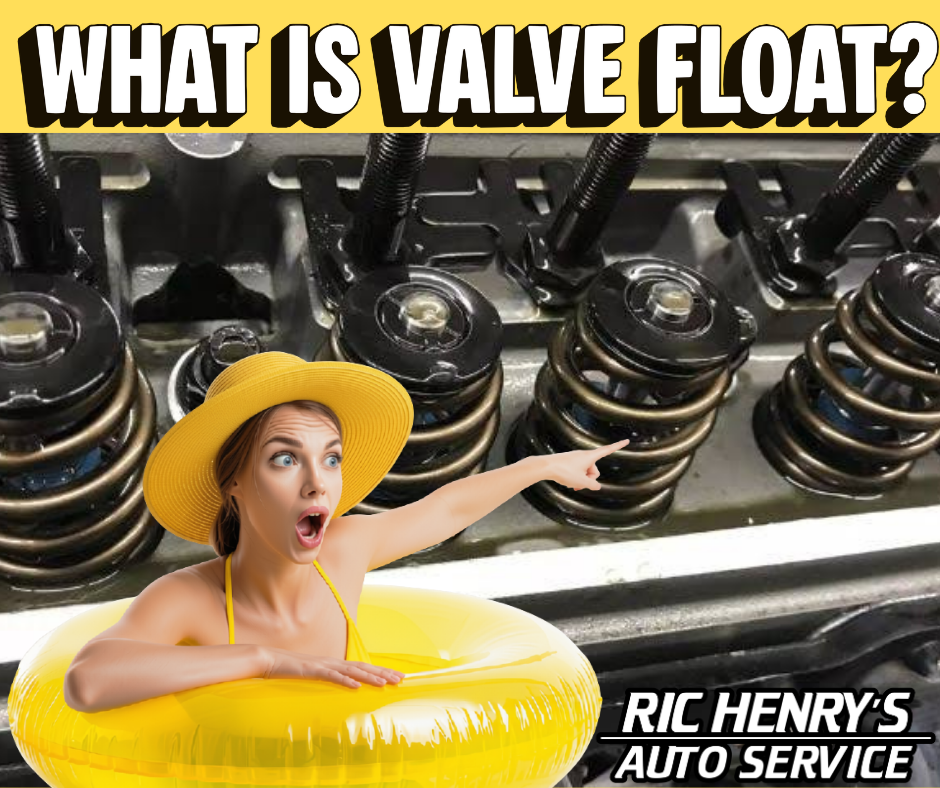
Learn what valve float is, its causes and warning signs, and how Ric Henry’s Auto Service provides trusted, modern engine diagnostics and repair for San Angelo drivers.