

Beyond Green Gunk: The High-Tech Chemistry Protecting Your San Angelo Engine
NaTasha Brand • January 28, 2026
Coolant 101: Silicates, Phosphates & Corrosion Inhibition
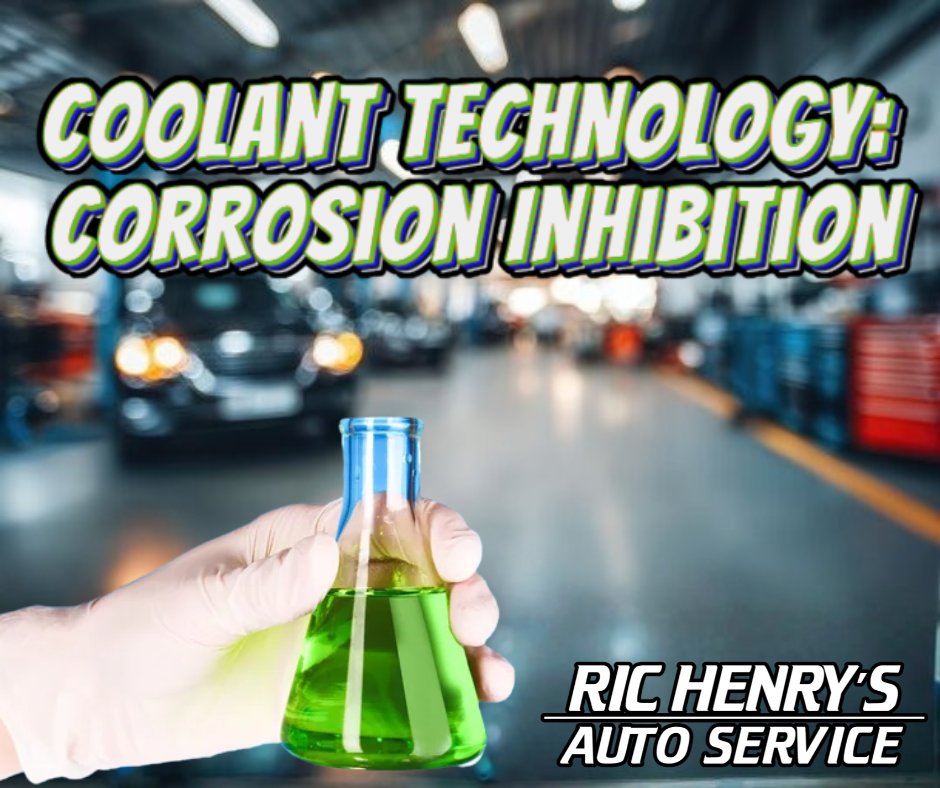
Let’s talk about the most misunderstood fluid in your vehicle. No, not the blinker fluid (though we’ve heard that one). It’s your coolant. That vibrant liquid sloshing in your radiator isn’t just “anti-freeze.” It’s a meticulously engineered chemical cocktail, a modern marvel of corrosion inhibition tasked with a Herculean job: protecting your engine’s metallic innards from turning into a costly pile of rust and scale, all while battling the brutal Texas heat.
Gone are the days of a simple green ethylene glycol mix. Today’s coolants are a saga of chemistry, and the heroes of this story are corrosion inhibitors: Silicates, Phosphates, and Organic Acids (OAT). Think of them as your engine’s personal anti-rust security detail.
The Cast of Chemical Characters:
- Silicates: The rapid-response team. These compounds form a near-instant, thin protective film on aluminum surfaces. Critical for protecting modern aluminum heads and radiator tanks from corrosive pitting. They’re fast but can be a bit overzealous, sometimes depleting quickly or forming gel-like deposits if not balanced correctly.
- Phosphates: The foundation builders. Excellent for protecting iron and steel components (think block liners, water pump sleeves). They create a stable protective layer. However, in water with high mineral content (hard water, which we certainly see in West Texas), they can precipitate out and form scale—akin to radiator kidney stones.
- Organic Acids (OAT): The long-term strategists. Developed for extended-life formulas, OAT compounds work differently. They don’t coat everything preemptively; instead, they remain in solution and only spring into action at sites of actual corrosion, neutralizing the attack. This allows for longer service intervals but requires different metallurgy to be fully effective.
The Evolution: From One-Size-Fits-All to a Tailored Suit.
The history of coolant is an arms race against corrosion. Early formulas were often silicate and phosphate-heavy. Then, as aluminum became king and global manufacturers sought longer drain intervals, technology splintered. You got OAT-based coolants (common in GM, some Fords), Phosphate-Hybrid OAT (often Honda, Toyota), and Silicate-Hybrid OAT (many Fords, Chrysler, and European specs).
The critical takeaway? Your modern vehicle’s cooling system is designed for a specific type of coolant chemistry. Using the wrong one, like pouring an Asian-specific formula into a European car, or vice-versa—can lead to inadequate protection or harmful deposits. It’s not just about color; it’s about the recipe.
Symptoms to Watch For: Your Coolant’s Cry for Help
In the San Angelo heat, your cooling system works overtime. Stay vigilant for:
- Discolored Coolant: It should be bright and clear (green, orange, yellow, red, blue). If it’s murky brown, rusty, or has an oily sheen, the inhibitors are exhausted or contamination is present.
- Visible Sediment or Scale: Grit in the radiator neck or reservoir is a major red flag.
- Overheating: Often the final act of a system hampered by internal scale or clogged passages.
- Frequent Low Coolant Levels: (With no visible external leak) Could point to internal corrosion eating away at gaskets or components.
Why This Demands a Shop That Evolved with the Science (Like Ours)
You can’t properly service a 2020s computer-on-wheels with 1990s knowledge. Coolant service is no longer a “drain and fill.” It requires:
1. Knowledge of the precise OEM specification for your make, model, and year.
2. The Right Tools & Chemistry: We use the same professional-grade diagnostic tools, flush equipment, and approved chemicals the dealerships do.
3. Expertise to correctly diagnose if corrosion has already begun its silent work.
At Ric Henry's Auto Service in San Angelo, we’ve evolved right alongside these fluid technologies. Our experienced technicians don’t just change coolant; we perform a comprehensive cooling system service: inspection, testing, correct fluid selection, and a proper exchange. We handle everything from minor fixes to major overhauls, backing all our work with a strong 3-year/36,000-mile warranty for your peace of mind.
So, trust the chemical guardians in your coolant. And when it’s time for service, trust your car to the experienced hands at Ric Henry’s Auto Service. After all, in the battle against West Texas heat and metallic decay, you want a pit crew that speaks fluent chemistry.

Electric water pumps boost efficiency but fail in new ways. For San Angelo drivers, trust Ric Henry's Auto Service for expert diagnosis & repair using dealer-level tools, backed by a 3-year/36,000-mile warranty.
Struggling with a foggy windshield in San Angelo? Learn how your defrost system works, common issues to watch for, and why regular maintenance at Ric Henry's Auto Service is your key to safe, clear driving.

Towing in San Angelo strains your transmission & fries its fluid. Learn why & why Ric Henry's Auto Service, with dealer-level tools & a 3-year warranty, is your best bet for repair.
Share On: